AI Strategy
Define high-impact GPT use cases, workflows, and implementation roadmaps for your team.
Learn moreLaunch intelligent workflows, automated support, and custom AI experiences with services designed for modern teams.
Define high-impact GPT use cases, workflows, and implementation roadmaps for your team.
Learn more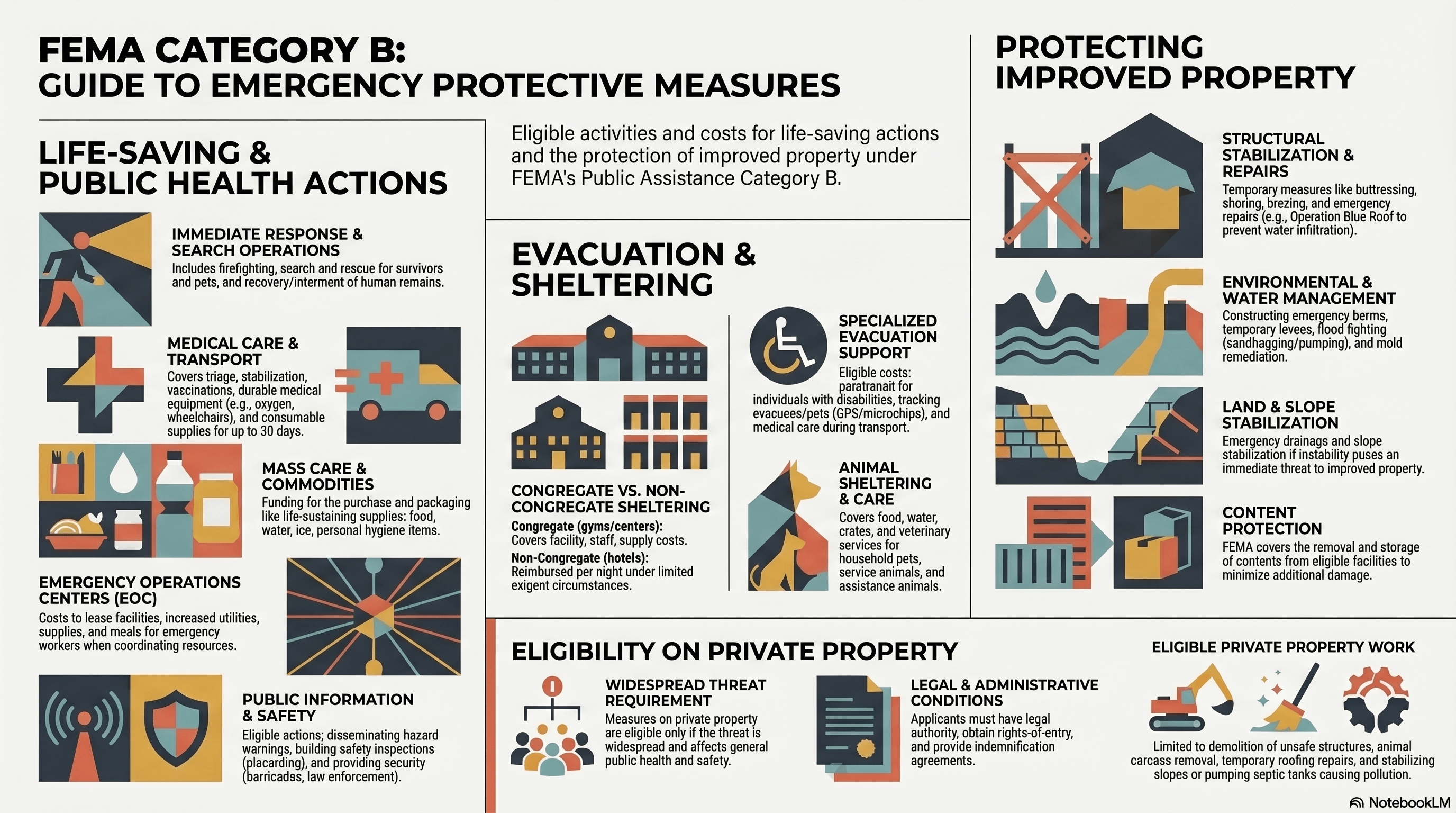
Create branded assistants that answer questions, qualify leads, and guide customers around the clock.
Learn more
Connect GPT to your internal tools to summarize data, draft content, and reduce repetitive tasks.
Learn more
Build scalable content engines for briefs, campaigns, product copy, documentation, and reports.
Learn more
Integrate GPT securely into apps, CRMs, support desks, knowledge bases, and custom platforms.
Learn more
Equip your team with practical prompt frameworks, governance guidance, and AI adoption playbooks.
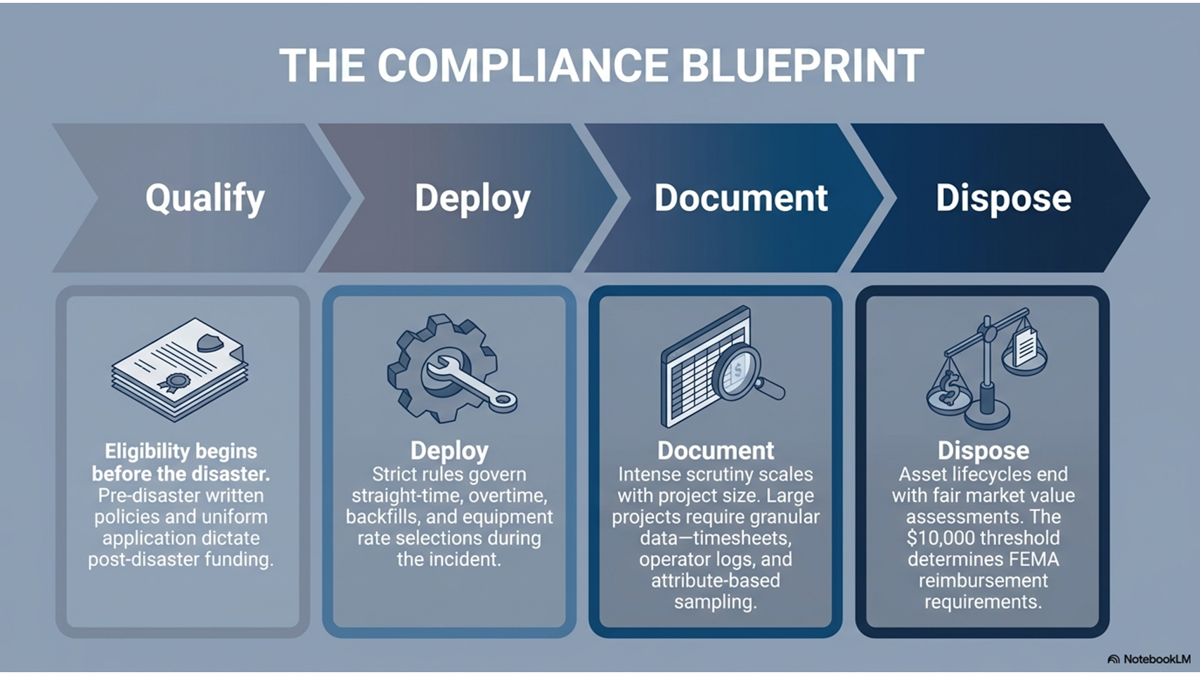
Learn moreTo ensure maximum cost recovery following a disaster, municipal leadership must strategically align operations with FEMA’s Public Assistance (PA) Program. Success in securing federal reimbursement is not merely a matter of post-disaster accounting; it is fundamentally rooted in pre-disaster policy preparation. From a Senior Consultant perspective, the audit risk cannot be overstated: failure to establish compliant frameworks before an incident occurs is the primary driver of significant funding de-obligations during grant reconciliation.This briefing deconstructs critical regulatory requirements, specifically the necessity of "pre-disaster" labor policies, the $10,000 fair market value threshold for asset disposition, and the nuances of budgeted versus unbudgeted labor. Organizations must recognize that while overtime (OT) is generally eligible, the recovery of straight-time (ST) costs is highly restricted by employee classification and the specific Category of Work (Emergency vs. Permanent).Critical Compliance Checklist To qualify for labor reimbursement beyond standard rates and protect against audit-related clawbacks, a pre-disaster labor policy must meet these three non-negotiable requirements:
FEMA prioritizes "pre-disaster" documentation to prevent applicants from "custom-building" pay structures to maximize federal grants after an incident. For compliance purposes, "Pre-disaster" is defined strictly as the period prior to the incident start date identified in the presidential disaster declaration.If a labor policy fails to meet the criteria of non-contingency, uniform application, and non-discretionary activation, the fiscal impact is severe: FEMA will limit PA funding to the applicant’s standard, non-discretionary pay rates, rendering any "emergency" premium pay ineligible. While direct reimbursement for labor hours is restricted, municipal CFOs must understand the role of Fringe Benefits . Though leave is ineligible as a direct labor cost, fringe benefits (Social Security, Medicare, insurance, and retirement) are calculated as a percentage of the hourly rate. Critically, because some benefits are not dependent on hours worked, the percentage for OT typically differs from the ST percentage.The following costs are categorically excluded from direct labor reimbursement:
Labor eligibility is determined by the intersection of employee classification (budgeted vs. unbudgeted) and the Category of Work. FEMA distinguishes between Emergency Work (Categories A–B, including debris removal and life-saving measures) and Permanent Work (Categories C–G).
Labor Classification,Type of Employee,Work Category,ST Eligible?,OT Eligible?
Budgeted,Permanent,Debris Removal (Cat A),Yes,Yes
Budgeted,Permanent,Emergency Protective Measures (Cat B),No,Yes
Budgeted,Part-time/Seasonal (Normal hours),Emergency Protective Measures (Cat B),No,Yes
Unbudgeted,Reassigned / Extra Hires,Debris & Emergency Work (Cat A-B),Yes,Yes
Unbudgeted,Essential (Called from furlough),Debris & Emergency Work (Cat A-B),Yes,Yes
Unbudgeted,Temporary Hire,Debris & Emergency Work (Cat A-B),Yes,Yes
Budgeted/Unbudgeted,All Staff,Permanent Work (Cat C-G),Yes,Yes
The "So What?" Layer: Strategic Advantage For Emergency Work (Categories A–B), there is a significant strategic advantage in utilizing "unbudgeted" employees or "extra hires." While FEMA generally denies straight-time (ST) for permanent, budgeted staff performing emergency protective measures, it fully reimburses the ST for unbudgeted staff or temporary hires. By strategically reassigning personnel or utilizing extra hires for emergency response, an applicant can capture labor costs that would otherwise be ineligible for their permanent staff.These general labor rules set the stage for more complex personnel movements, such as reassignments and backfilling.
Maintaining operational continuity during a disaster requires shifting human capital, but these movements trigger specific eligibility rules.
FEMA reimburses applicant-owned equipment based on established hourly rates that represent the total cost of ownership and operation.FEMA Rate Components and the "Standby" Rule The FEMA equipment rate includes depreciation, overhead, maintenance (labor/parts), fuel, and tires. Because these are all-inclusive, mechanic labor and fuel cannot be claimed separately . A critical strategic nuance for asset management: while equipment standby time is generally ineligible, it is eligible if used intermittently for more than 50% of the working hours in a given day.Lease vs. Purchase Requirements Applicants are mandated to perform a "lease vs. purchase" cost-benefit analysis before acquisition. If total rental/leasing costs exceed the cost of purchasing and maintaining the equipment for the life of the project, FEMA will cap reimbursement at the lower purchase/maintenance cost.Documentation Requirements Comparison | Applicant-Owned Equipment | Purchased Equipment | | :--- | :--- | | Itemized cost summary of actual usage | Itemized cost summary of acquisition | | Equipment type (Year, make, model, HP, wattage) | Invoices and receipts | | Precise location(s) of use | Justification for use (if not immediately deployed) | | Equipment code (if using FEMA rates) | Total acquisition cost | | Operator name with daily dates/hours | N/A |The lifecycle of these assets eventually reaches a point of "disposition," where FEMA’s clawback provisions take effect.
The "Disposition" phase during final grant reconciliation determines if an applicant must "pay back" a portion of the grant based on the residual value of assets.Defining Assets