Smart Asset Registry and FEMA Compliance: Avoiding the Wrong Message
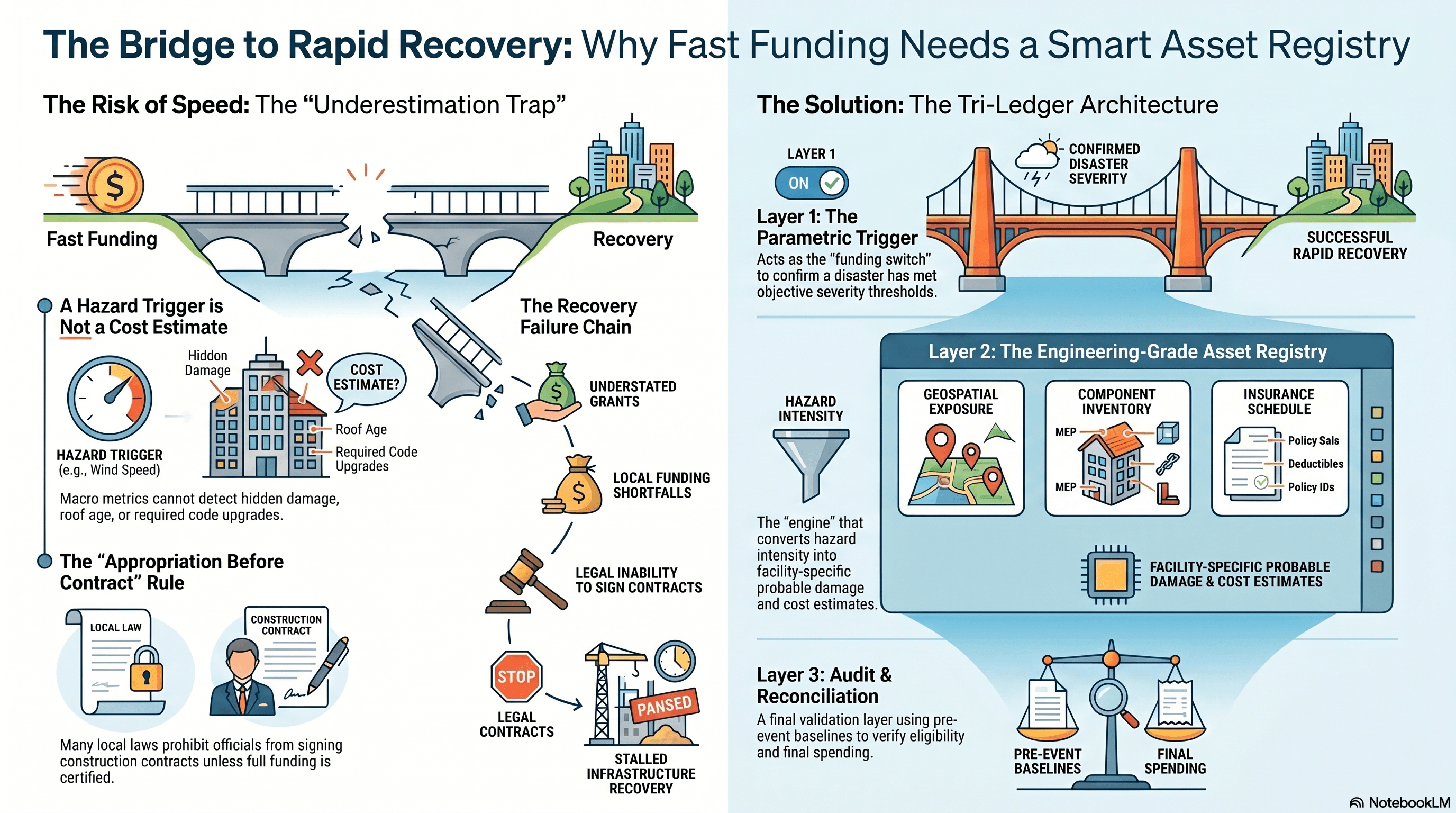
A Smart Asset Registry is not a shortcut around FEMA rules—it is a stronger way to prepare FEMA-ready submissions before disaster strikes. This Govstar resource explains how applicants can organize the evidence FEMA still requires for Public Assistance eligibility, including disaster causation, designated-area location, legal responsibility, facility eligibility, work eligibility, cost reasonableness, insurance, EHP compliance, procurement, and documentation. The core message: a Smart Asset Registry helps applicants prove the rules faster, cleaner, and more defensibly—not bypass them. **Character count:** ~594 characters.
Smart Asset Registry and FEMA Compliance: Avoiding the Wrong Message
The Smart Asset Registry should not be marketed as a way to bypass FEMA rules. It should be marketed as a way to prepare better FEMA submissions.
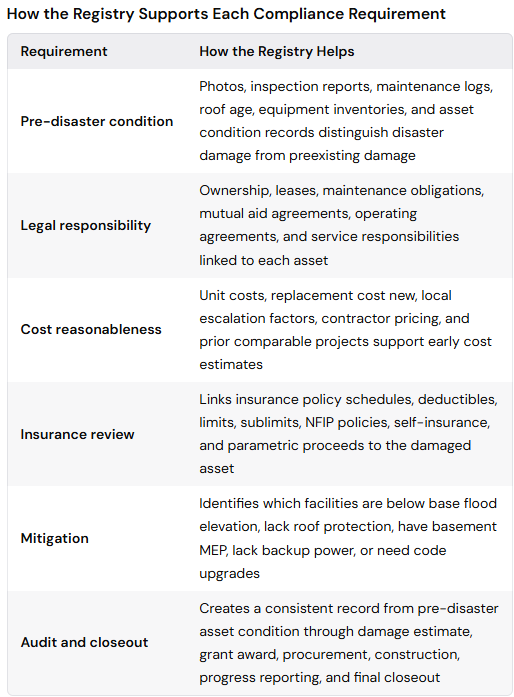
Current FEMA PA eligibility still requires disaster causation, designated-area location, and legal responsibility (44 CFR § 206.223). FEMA also evaluates facility eligibility, work eligibility, cost reasonableness, insurance, environmental and historic compliance, procurement, and documentation.
A Smart Asset Registry helps with those requirements by organizing evidence before the disaster.
Under proposed §409, annual progress reports would include funded projects, permitted and commenced projects, completed projects, and remaining project status, with reports made publicly available. A Smart Asset Registry can become the backbone of that reporting system.