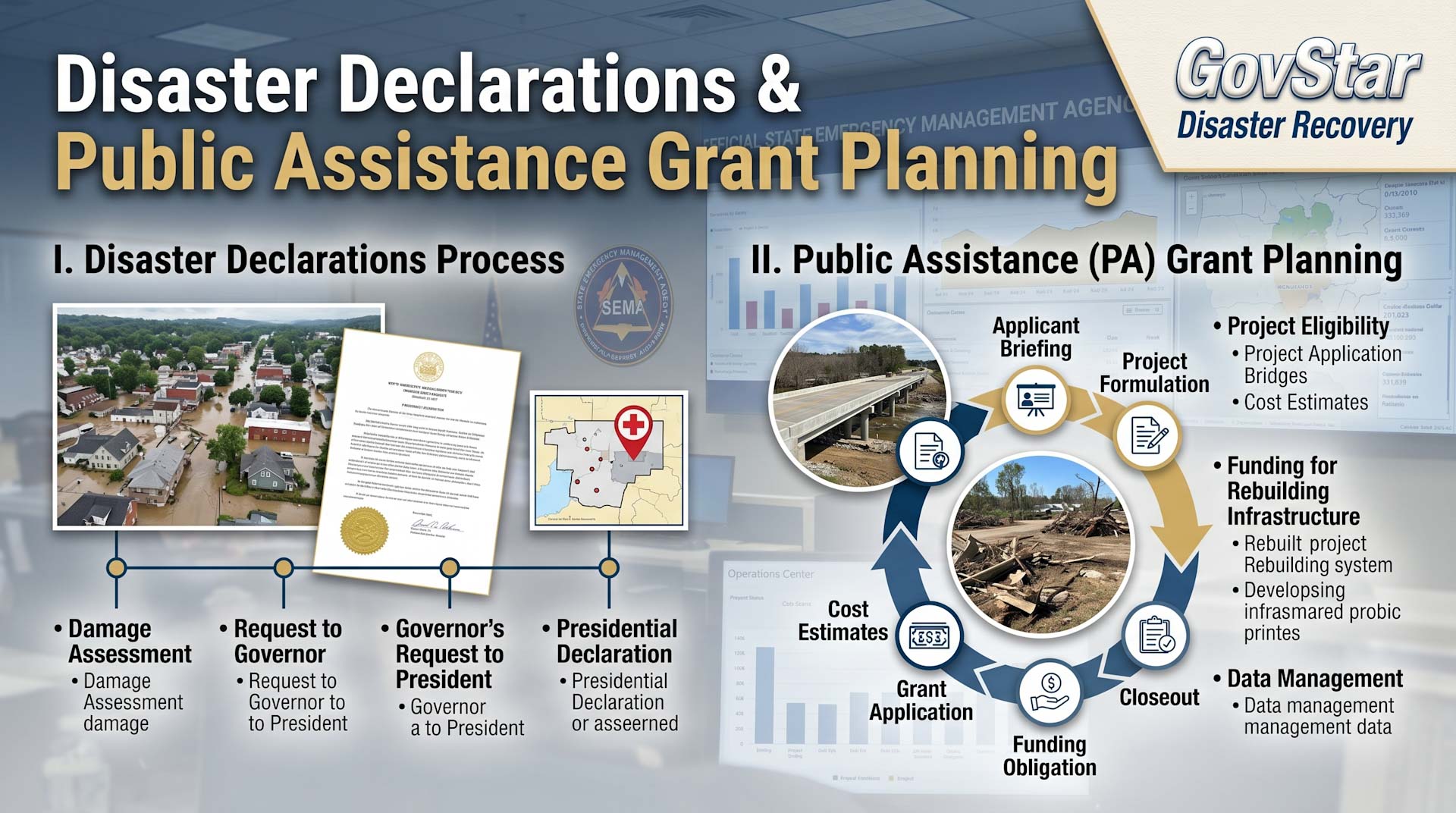
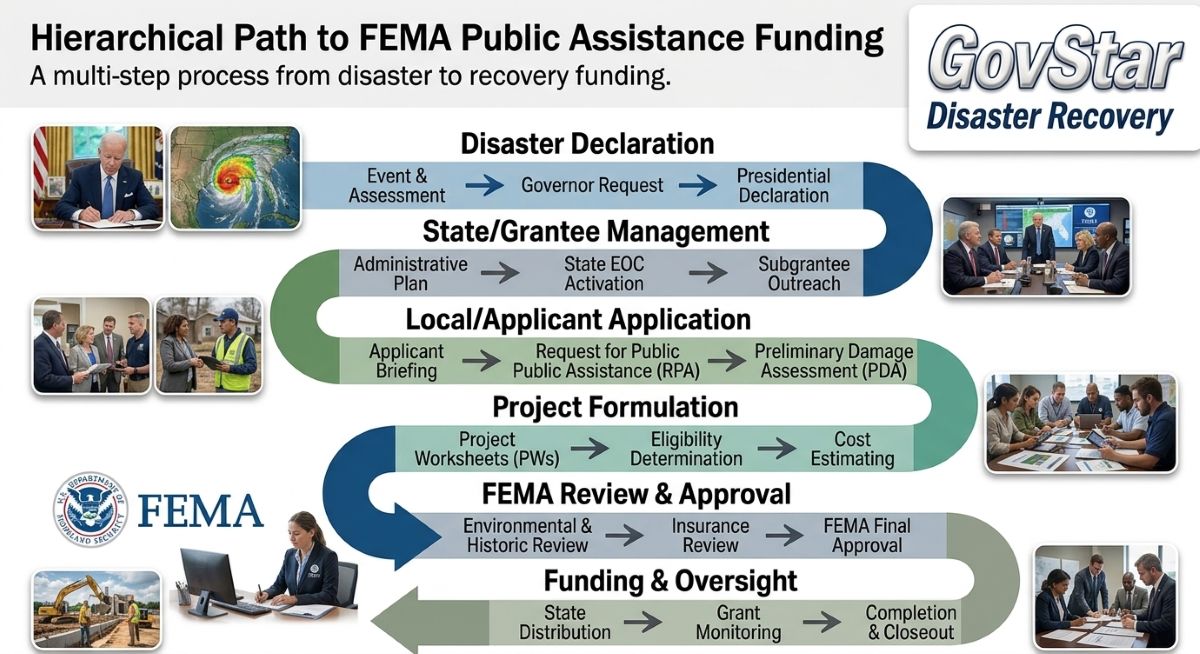
Learn presidential declarations, damage assessments, cost-share matching, and administrative grant planning under the Stafford Act.
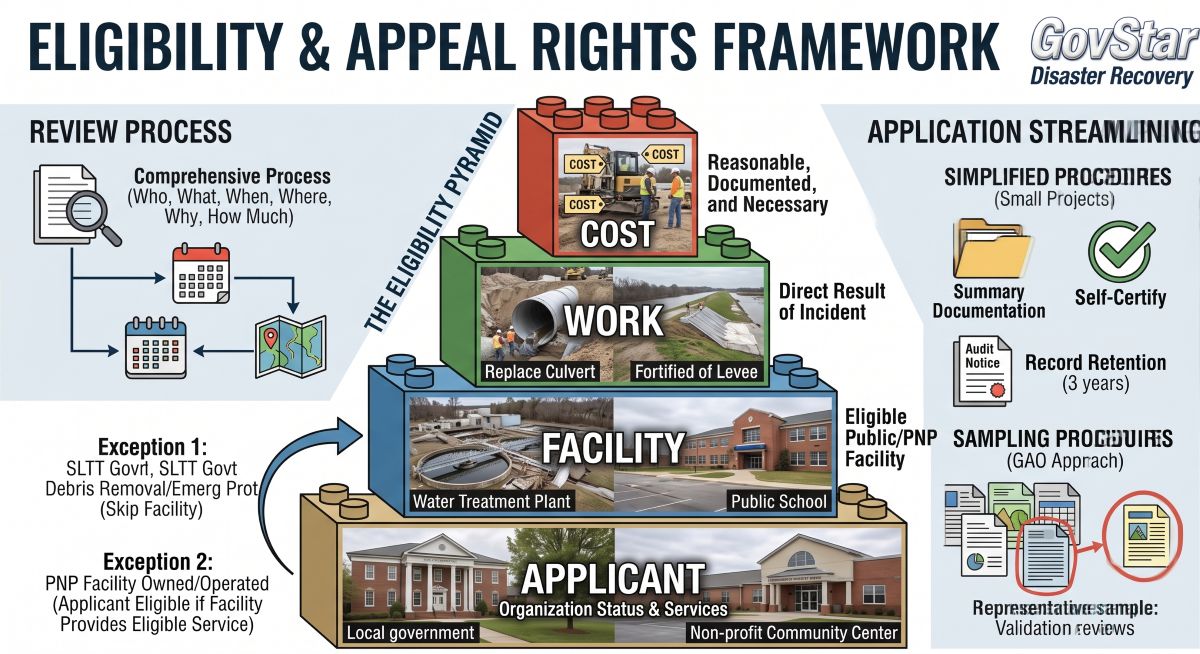
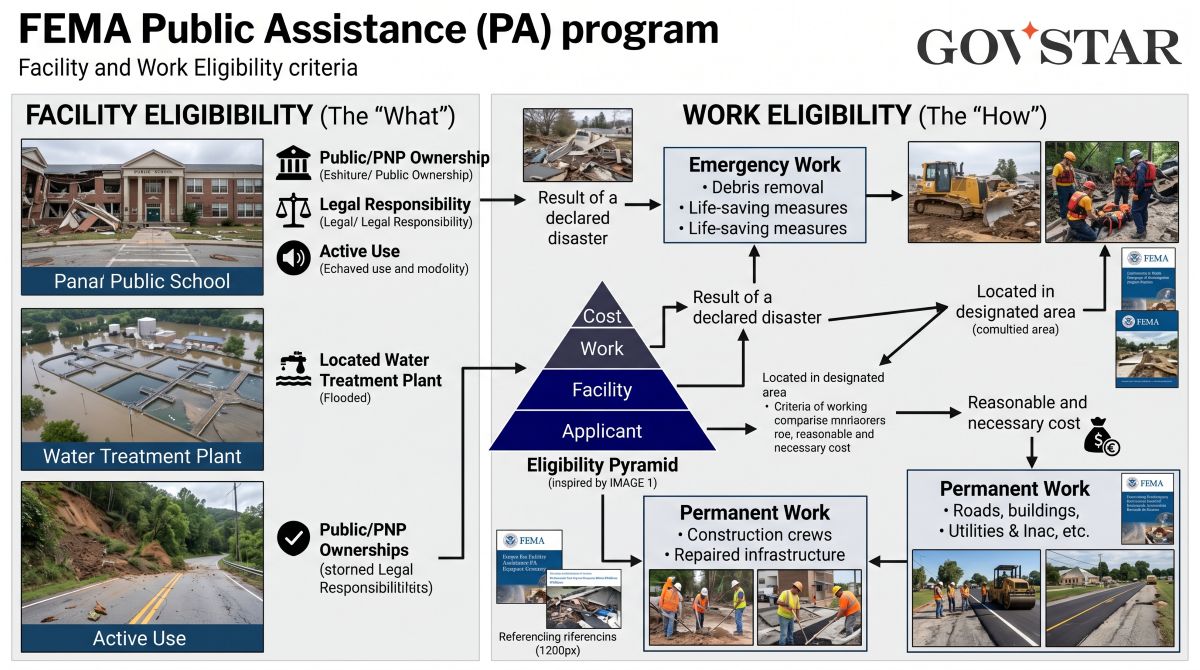
Master the PA eligibility pyramid, RFI deadlines, two-tiered appeals, and CBCA arbitration thresholds.
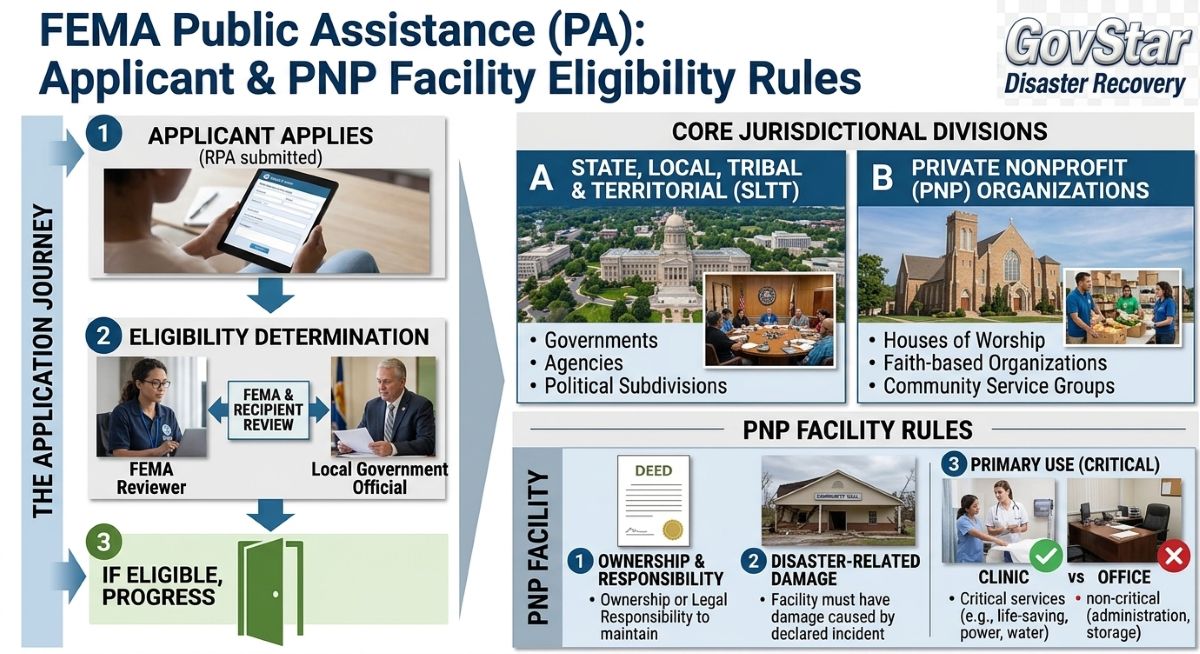
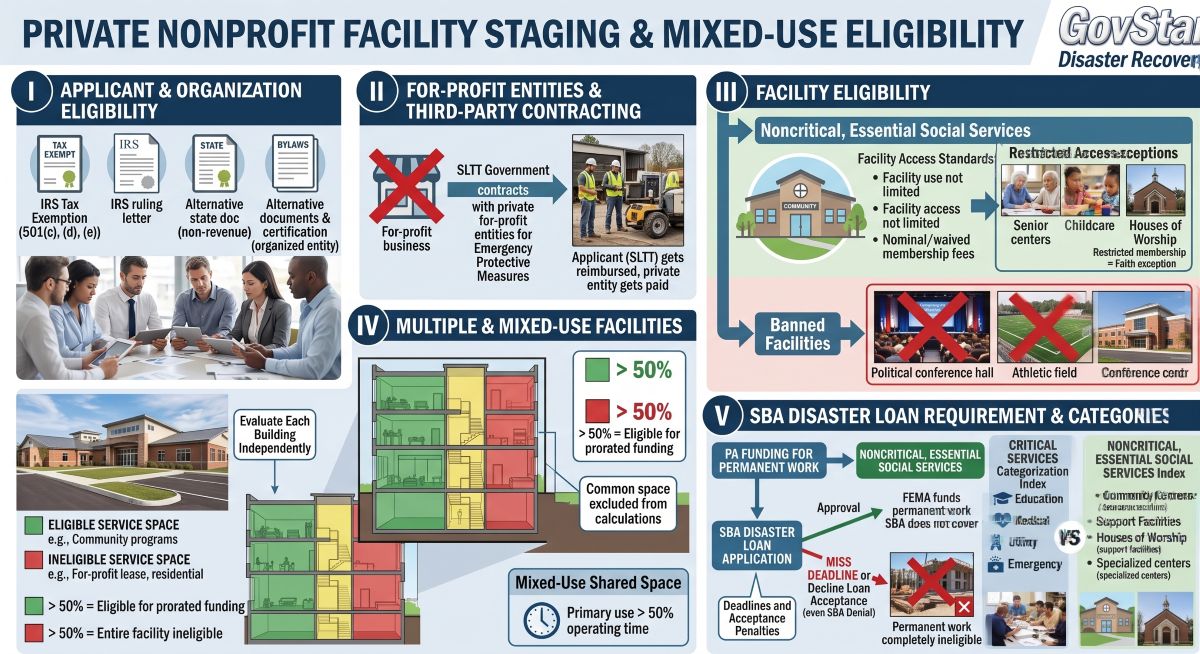
Criteria for SLTT and private nonprofit eligibility, critical services definitions, and SBA disaster loan matching rules.
Federal environmental laws, C.F.R. regulations, and Executive Orders governing Public Assistance grants.
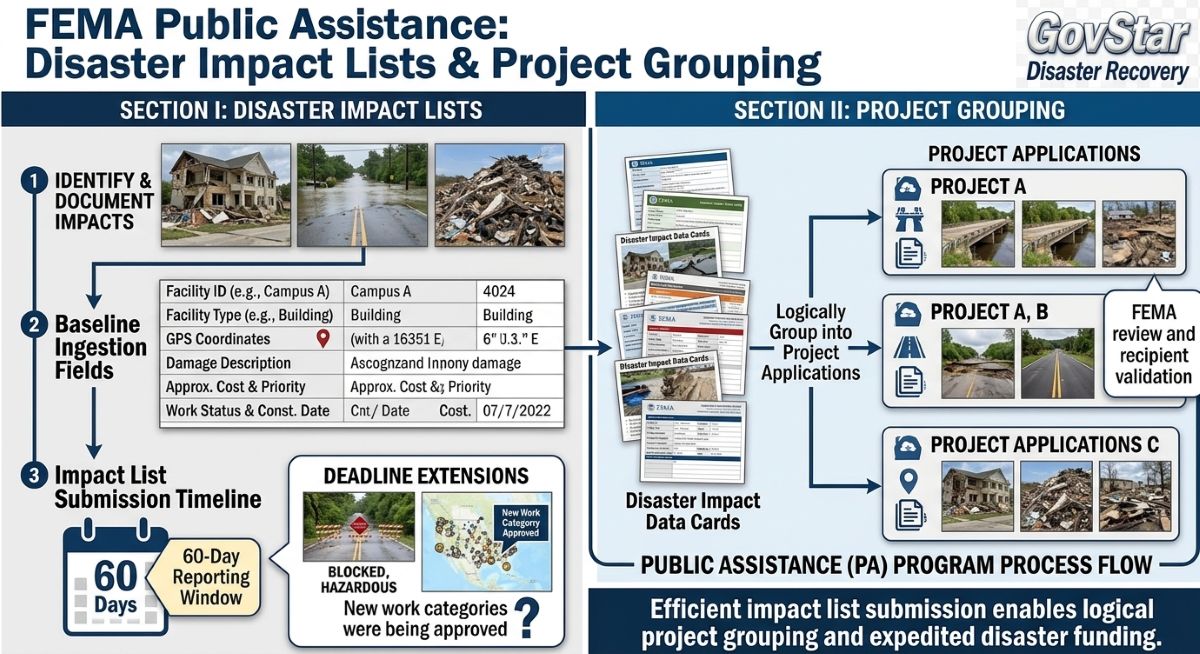
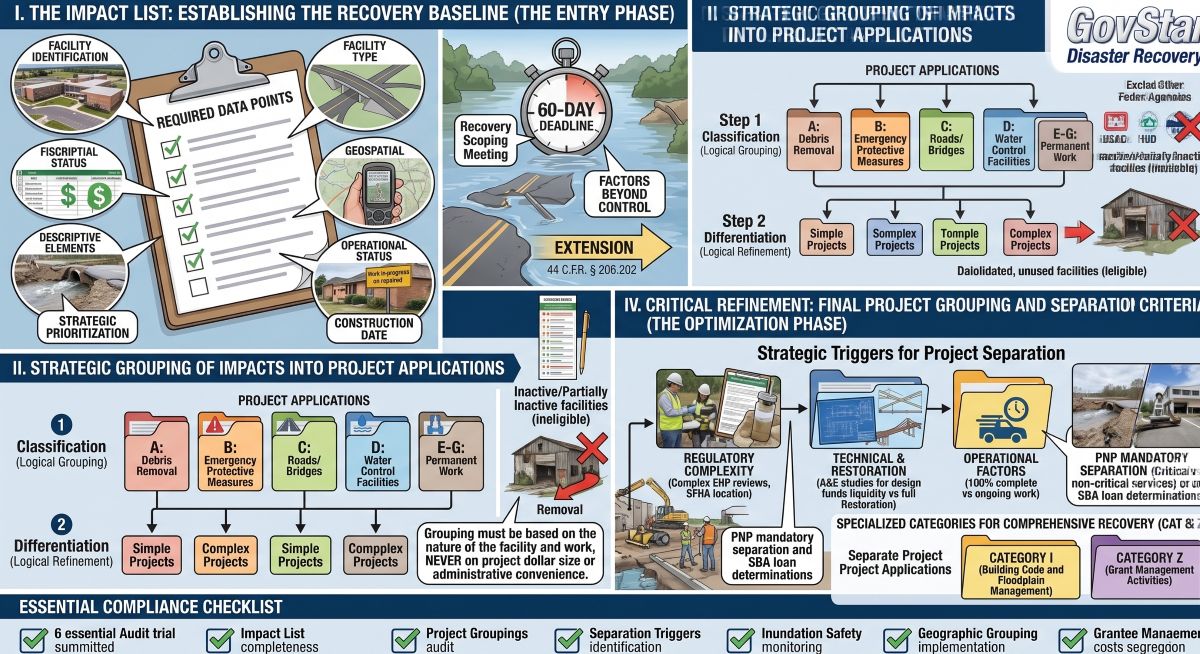
Deadlines for damage reporting, submerged infrastructure evaluation, and logical project grouping under FEMA PA.
FEMA evaluation outcomes for PNP support facilities, HOAs, houses of worship, and recreational centers.
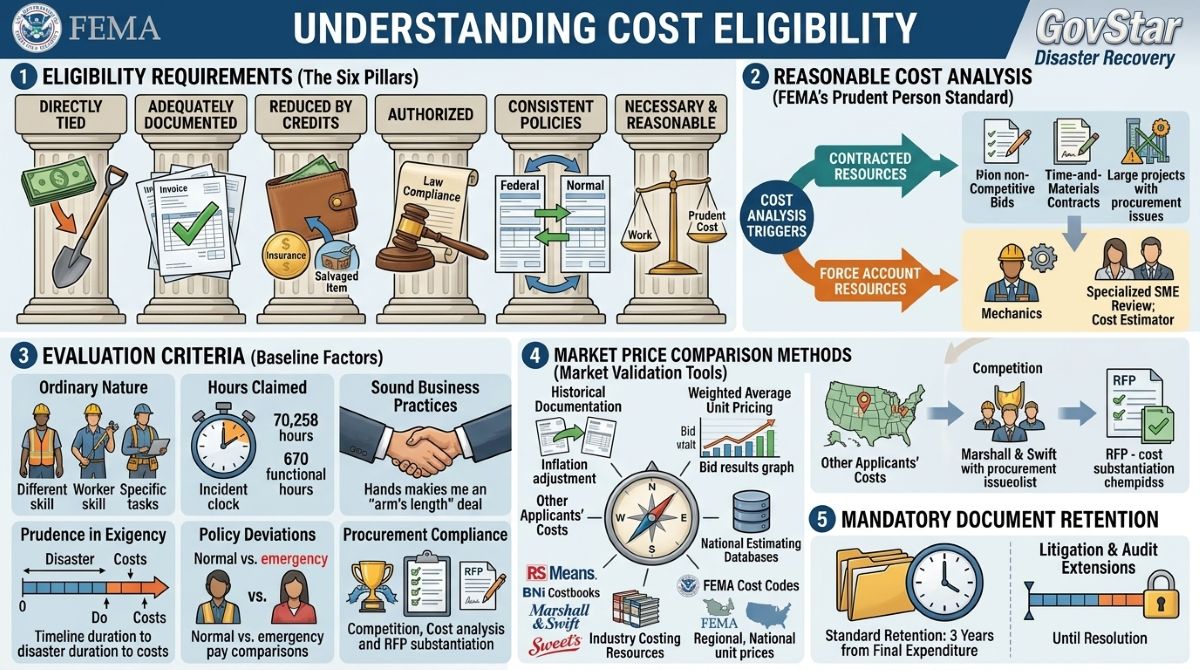
Force account labor rules, cost reasonableness analysis, 2 C.F.R. procurement standards, and duplication of benefits.
Section 428 fixed-cost caps, excess funds flexibility, and restricted appeal rights for permanent work.
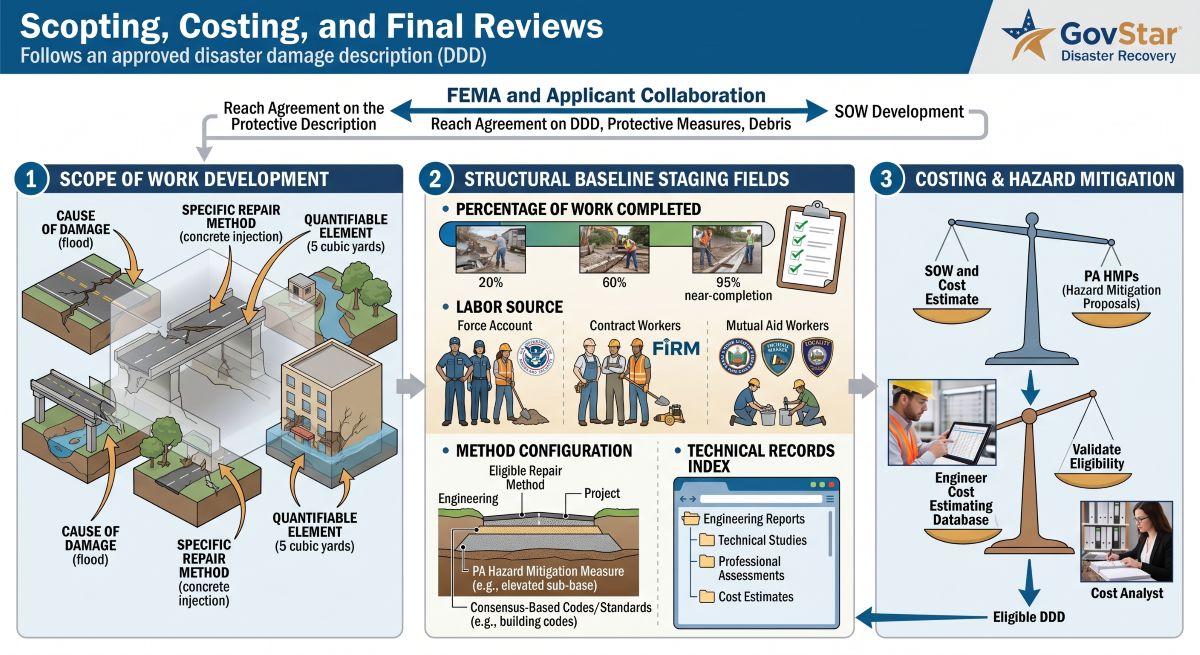
Scope of work development, large vs small project thresholds, and expedited emergency funding protocols.
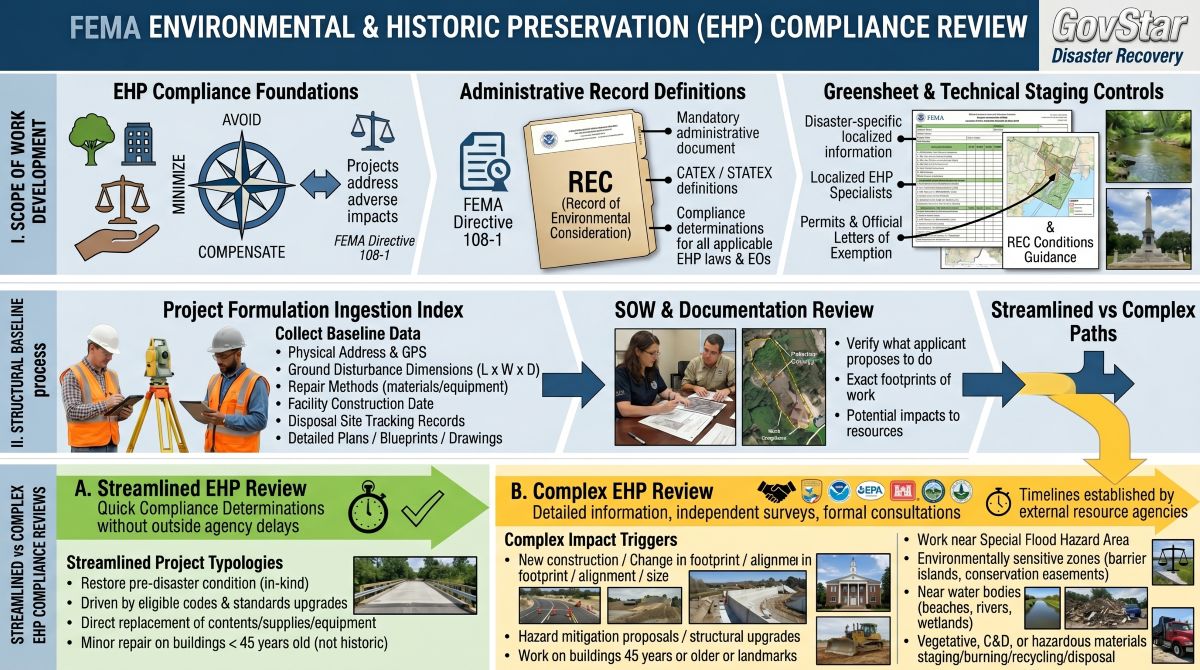
NEPA review levels, NHPA Section 106 triggers, CWA Section 404 permits, and required REC documentation.
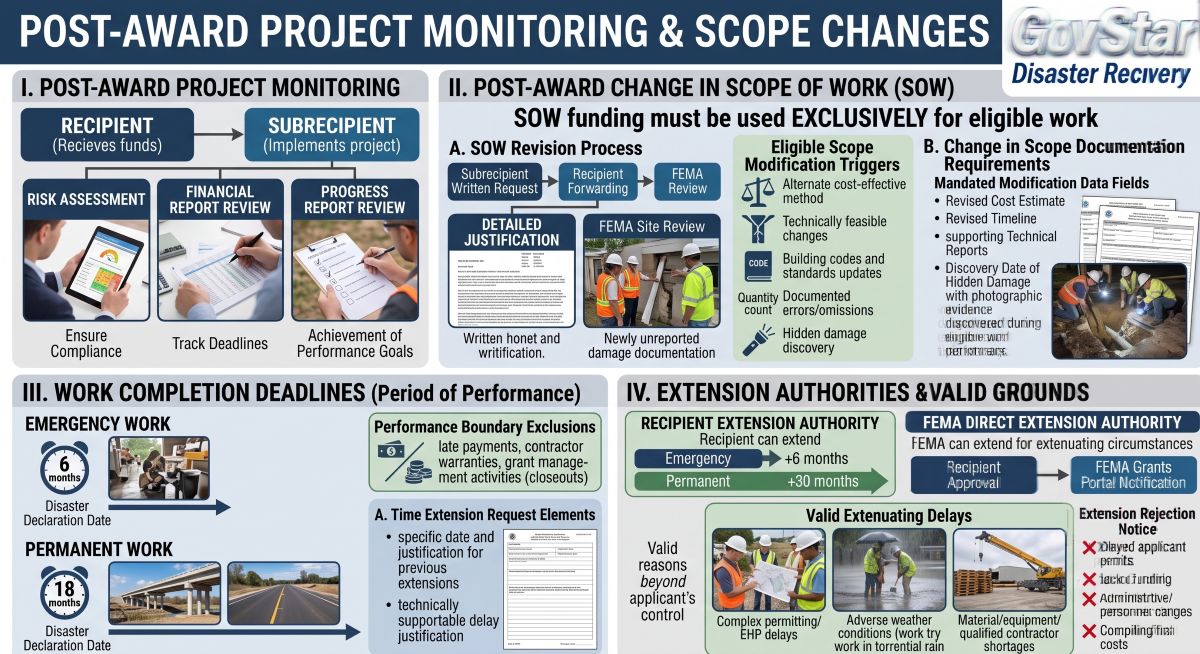
Project revision protocols, quarterly reporting, 2 C.F.R. single audits, and VAYGo payment integrity reviews.
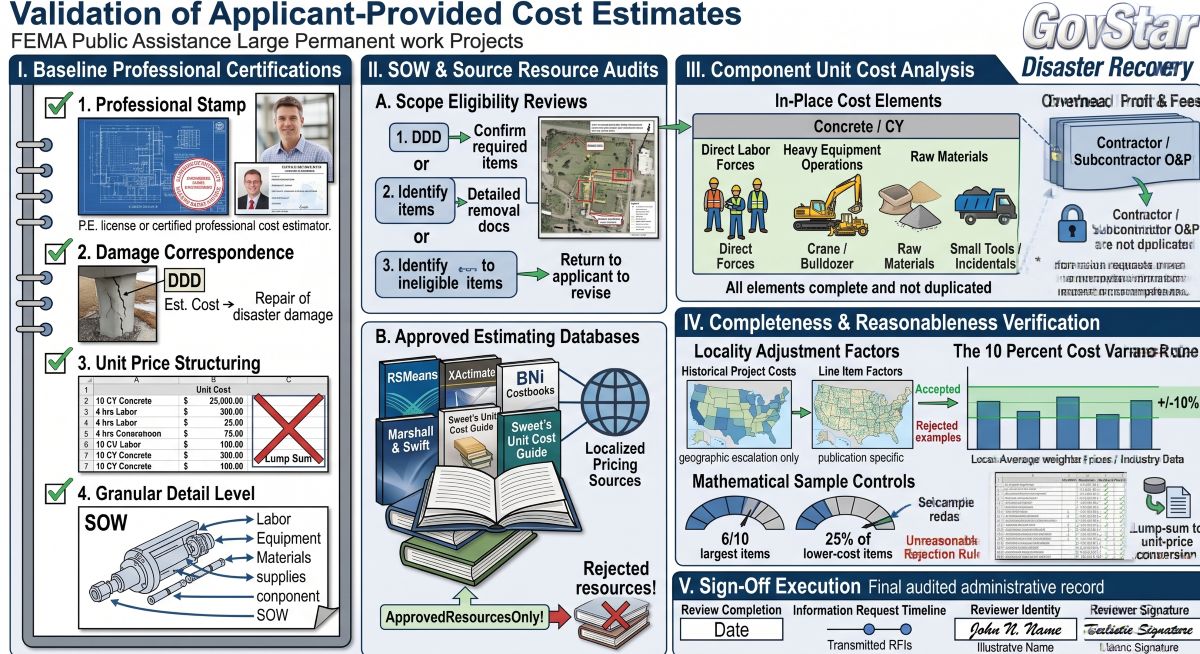
Regulatory checklist, professional certifications, and cost variance rules for large project funding validation.
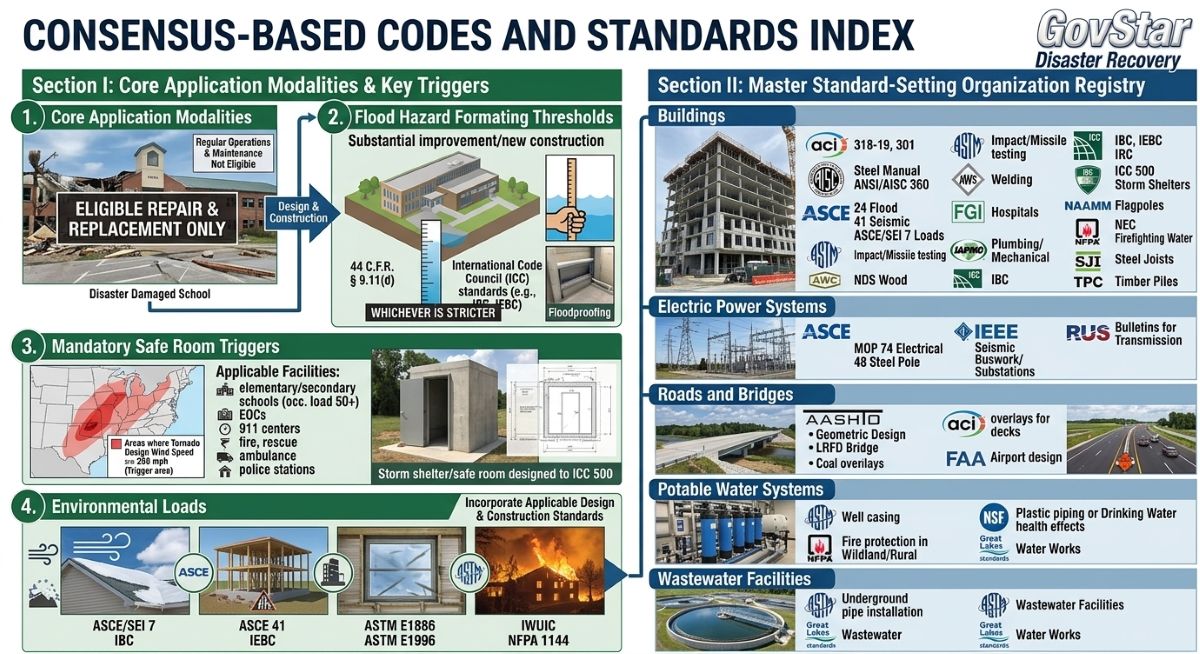
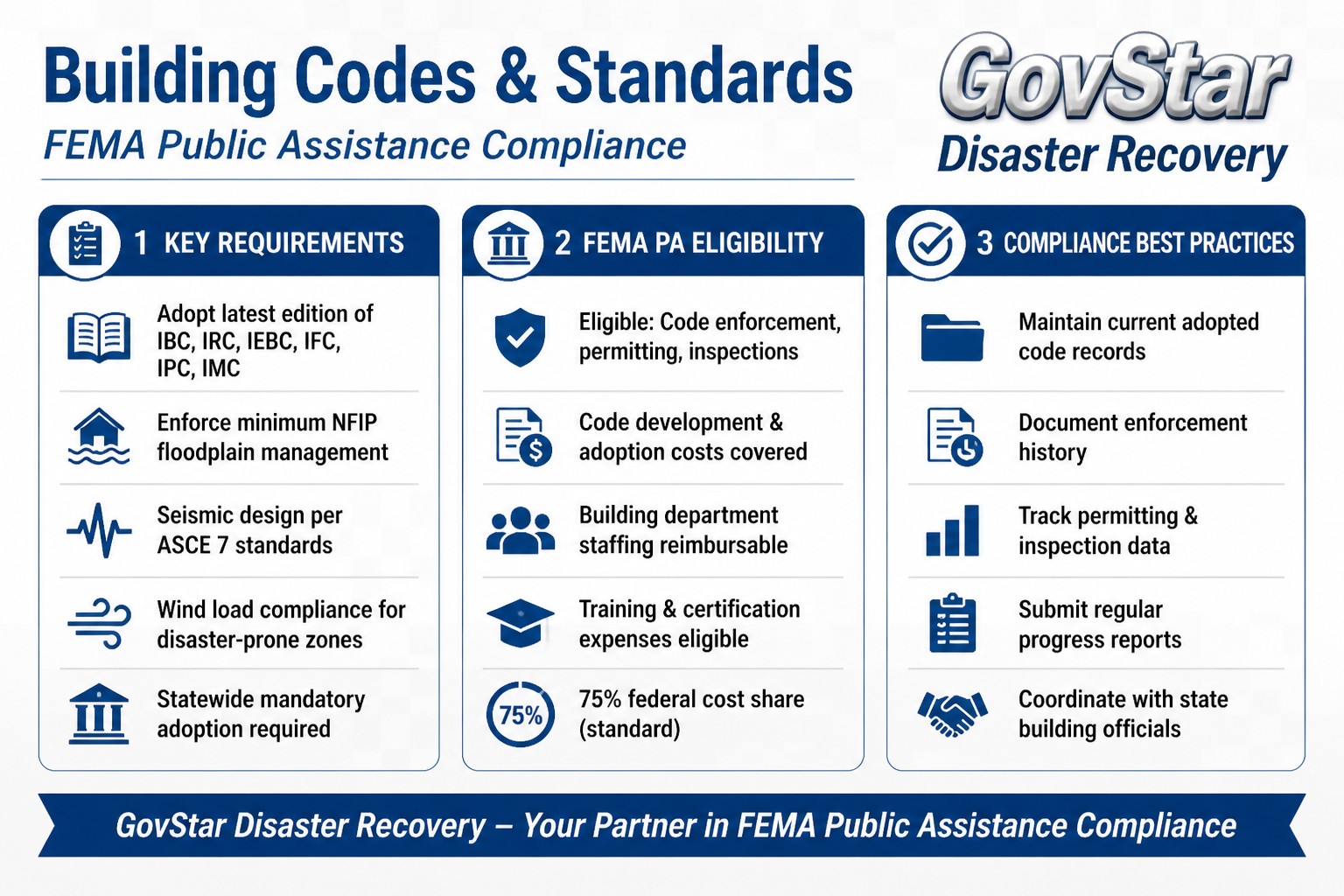
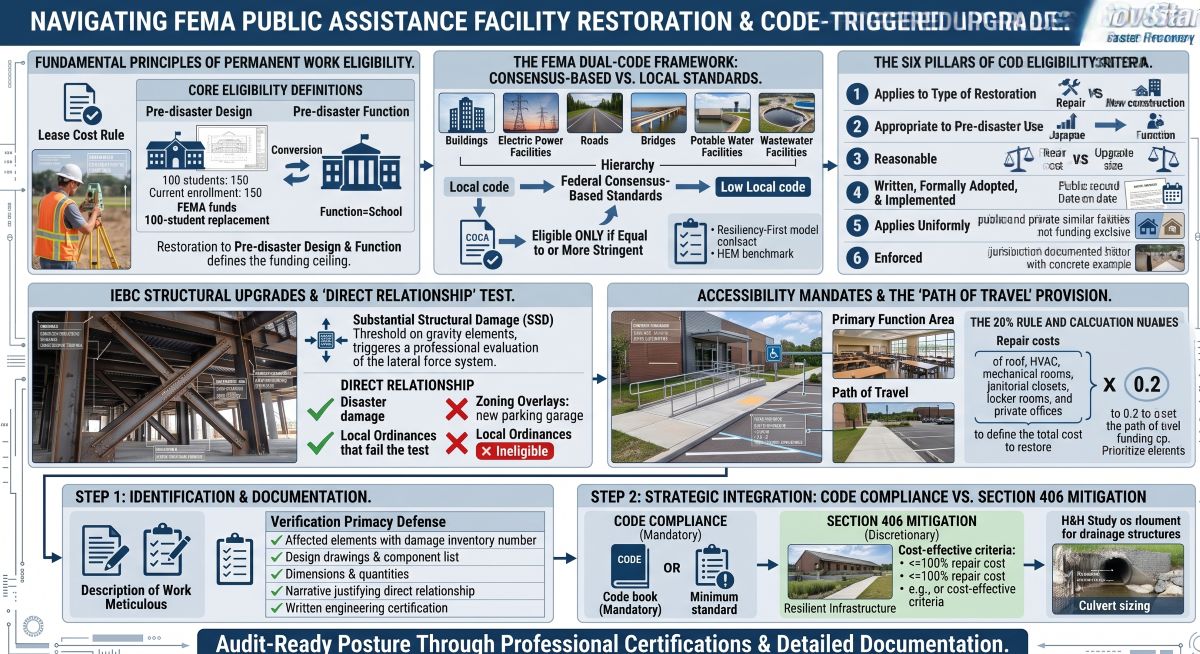
Mandatory technical building, utility, and transportation design codes for Public Assistance projects.
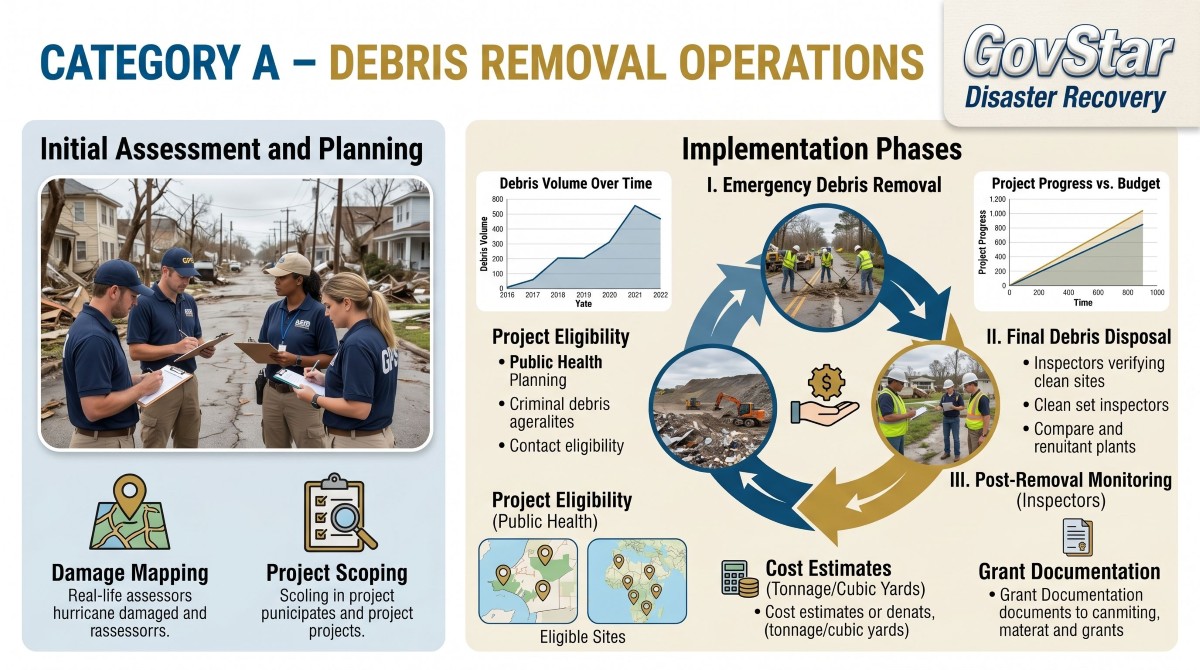
Category A operations: community stabilization, fiscal stewardship, and federal eligibility compliance.
Consensus-based codes and local standards as determinants of federal funding eligibility for restoration.
Impact List fundamentals: define disaster scope, document damage, and maintain audit readiness.
Master the eligibility pyramid: Applicant ? Facility ? Work ? Cost for FEMA PA funding success.
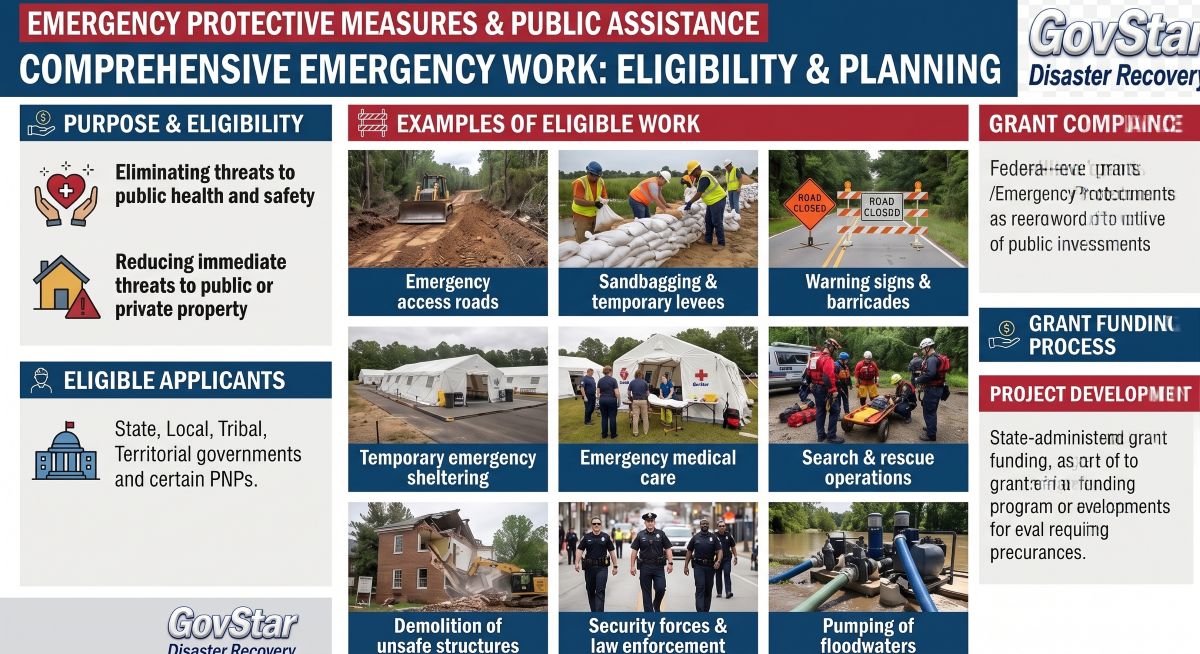
Category B funding for immediate threat reduction under 44 C.F.R. � 206.225 and Stafford Act authority.
The tiered screening process: Applicant eligibility must be validated before project costs are reviewed.
Restore damaged facilities while navigating codes, ADA requirements, and Section 406 mitigation rules.
Why upfront disaster grants can fail when parametric triggers collide with local budget authority.
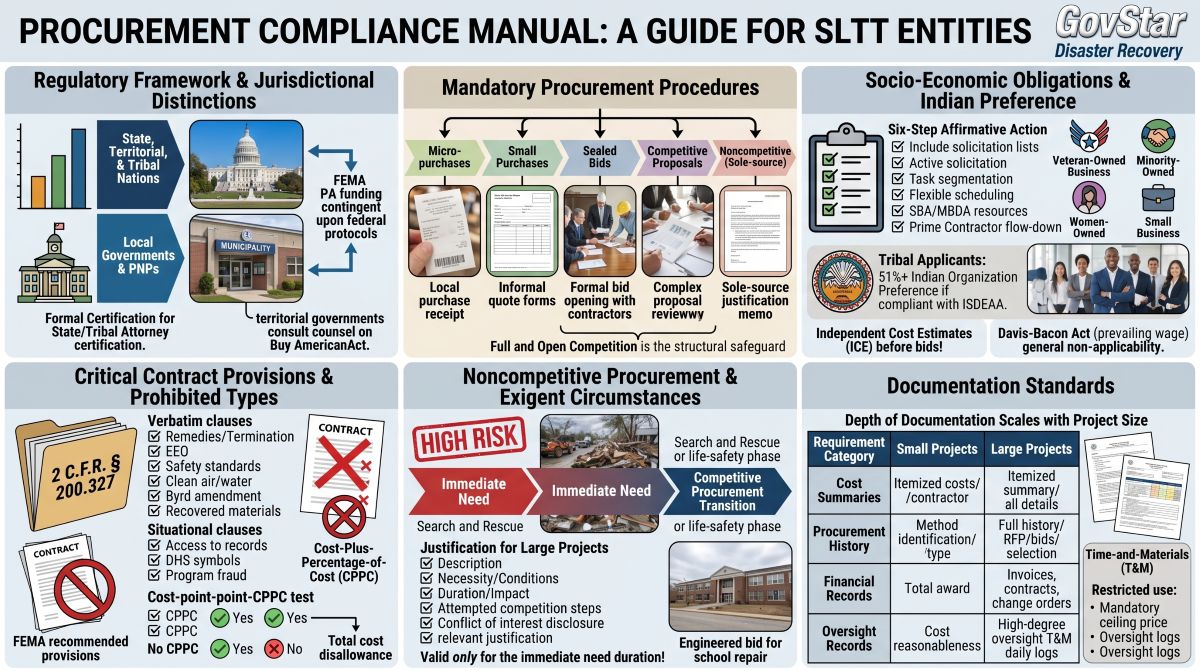
How SLTT applicants protect disaster funding by following 2 CFR Part 200 procurement rules.
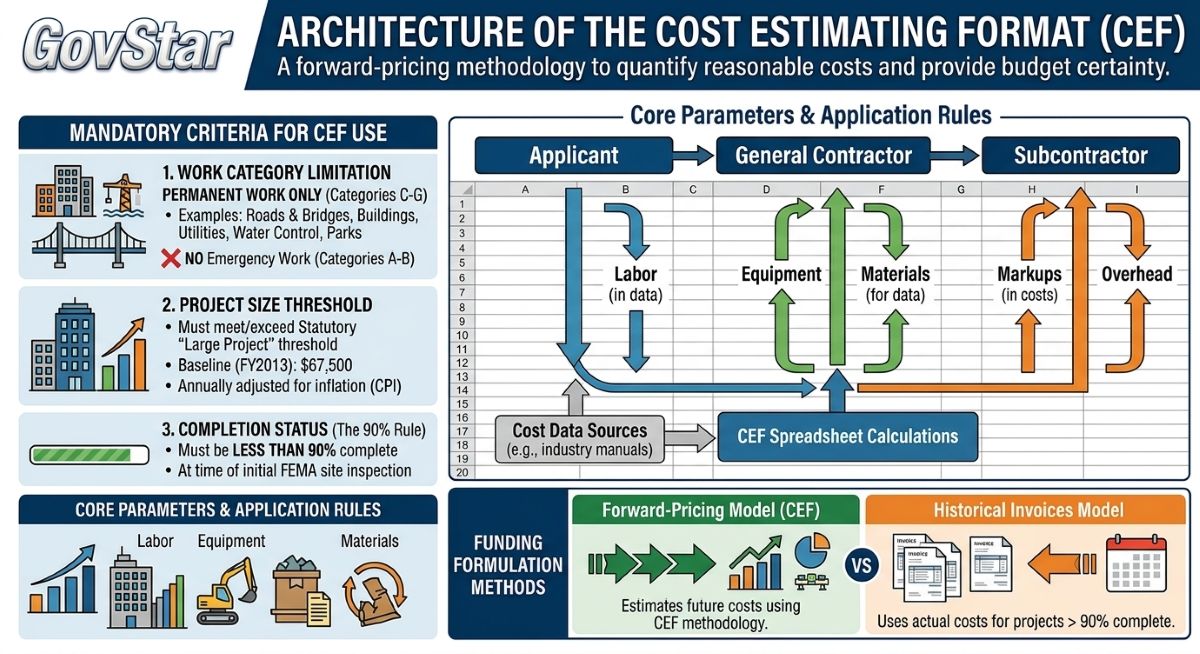
CEF methodology for forward-pricing large permanent work projects meeting the 90% completion rule.
Mapping Categories C�G work types, structural exclusions, and EHP/NFIP compliance triggers.
Conflict of interest disclosures, micro-purchase rules, and procurement history documentation requirements.
Final reconciliation procedures, small project overruns, closeout packages, and Section 705 recovery limits.