Independent FEMA Public Assistance resource. Not affiliated with FEMA.DeclarationsRecovery GuidesStart hereReform watchContact
GovStar’s illustrated guides and deep dives: every one pairs a graphic with a plain-language walkthrough of the rules. Pick a picture to open the full guide.
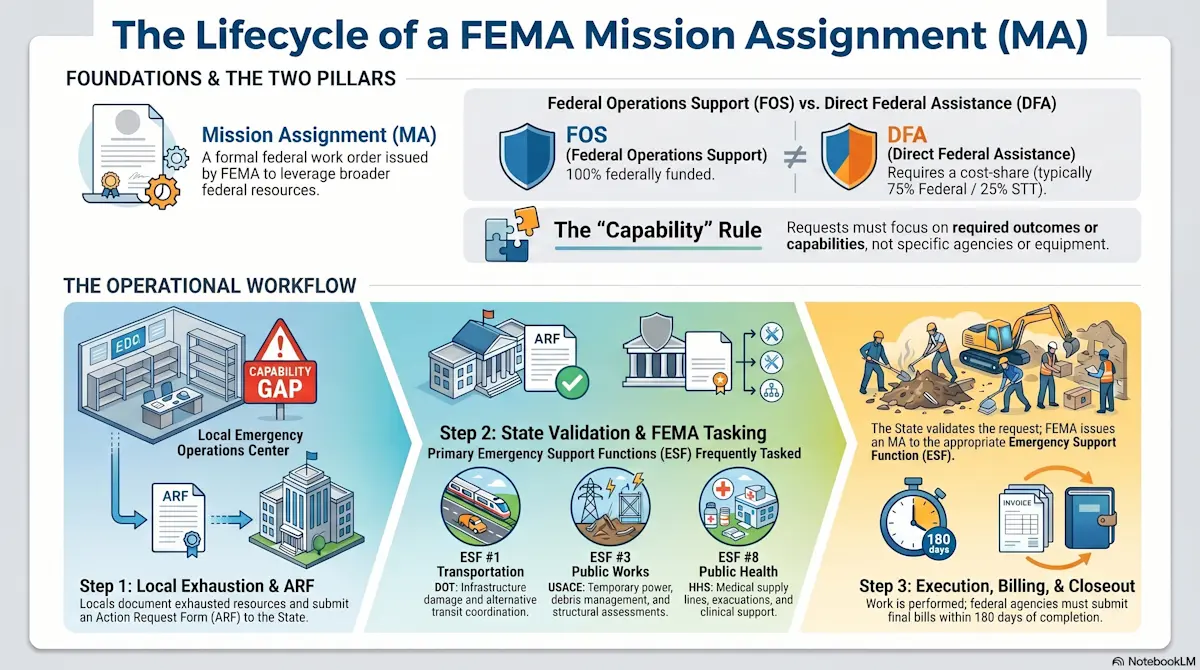 BriefingUnderstanding Mission Assignments and Direct Federal AssistanceUnder the Robert T. Stafford Disaster Relief and Emergency Assistance Act , federal intervention is not a default response but a highly…
 BriefingDamage and Impact Information in Public AssistanceThe Impact List is the fundamental administrative tool for defining the scope of a disaster declaration. Per 44 C.F.R. § 206.201(l),…
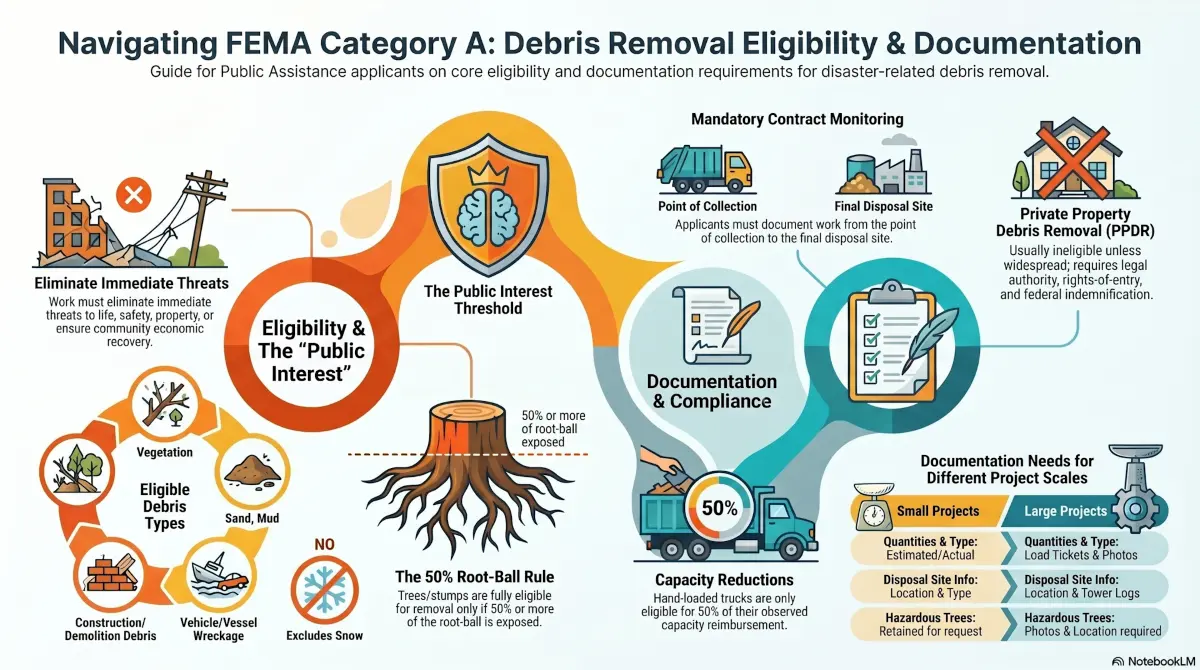 BriefingCategory A – Debris Removal OperationsCategory A debris removal operations represent a critical juncture in disaster recovery, serving as both a primary driver for community…
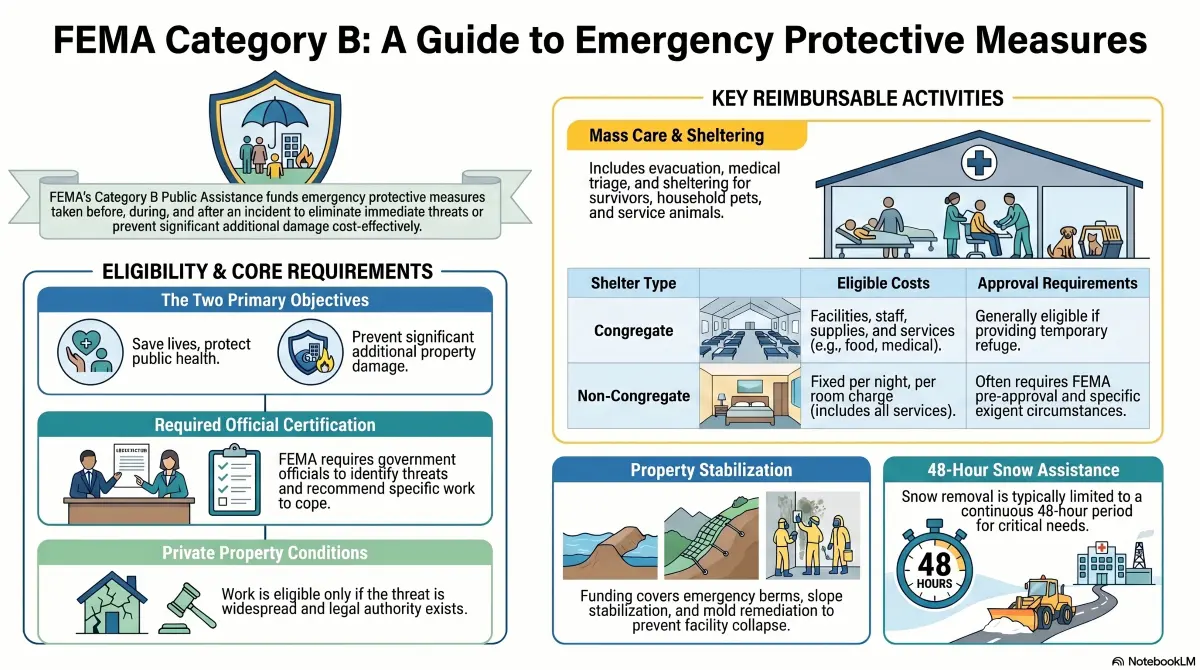 BriefingFEMA Category B Emergency Protective MeasuresFEMA Category B Public Assistance (PA) funding serves as a critical strategic mechanism for immediate threat reduction and the…
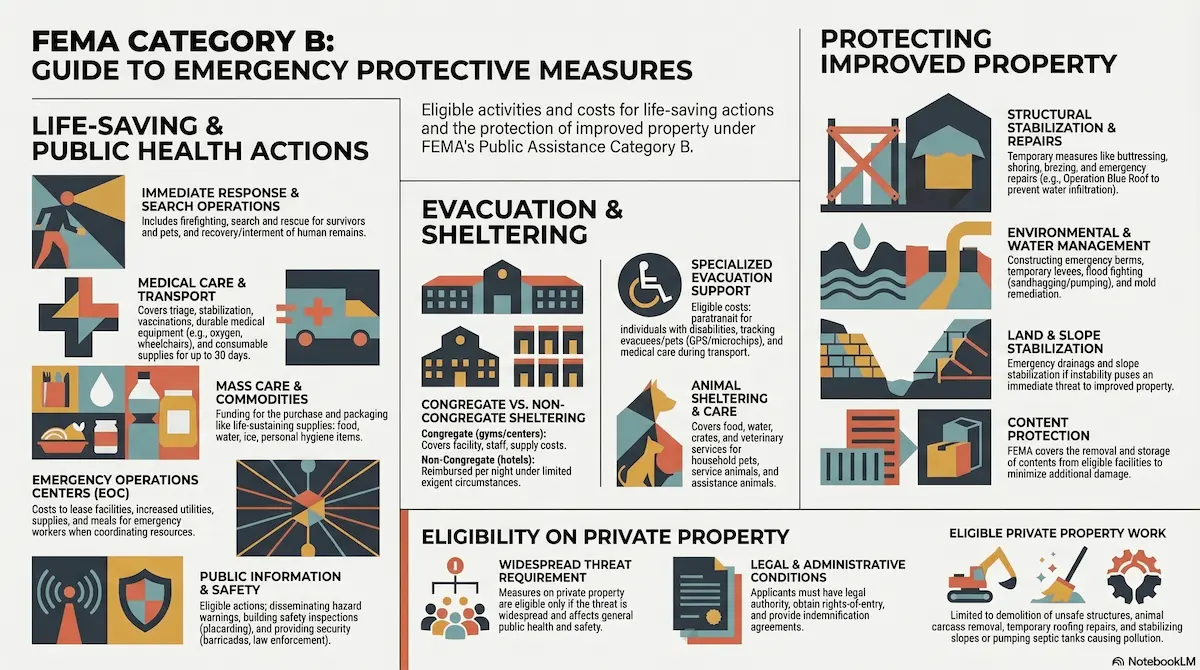 BriefingEmergency Protective Measures (Category B): Eligibility and Implementation BriefingEmergency Protective Measures are often the first FEMA PA costs incurred—and some of the most scrutinized. This Govstar resource…
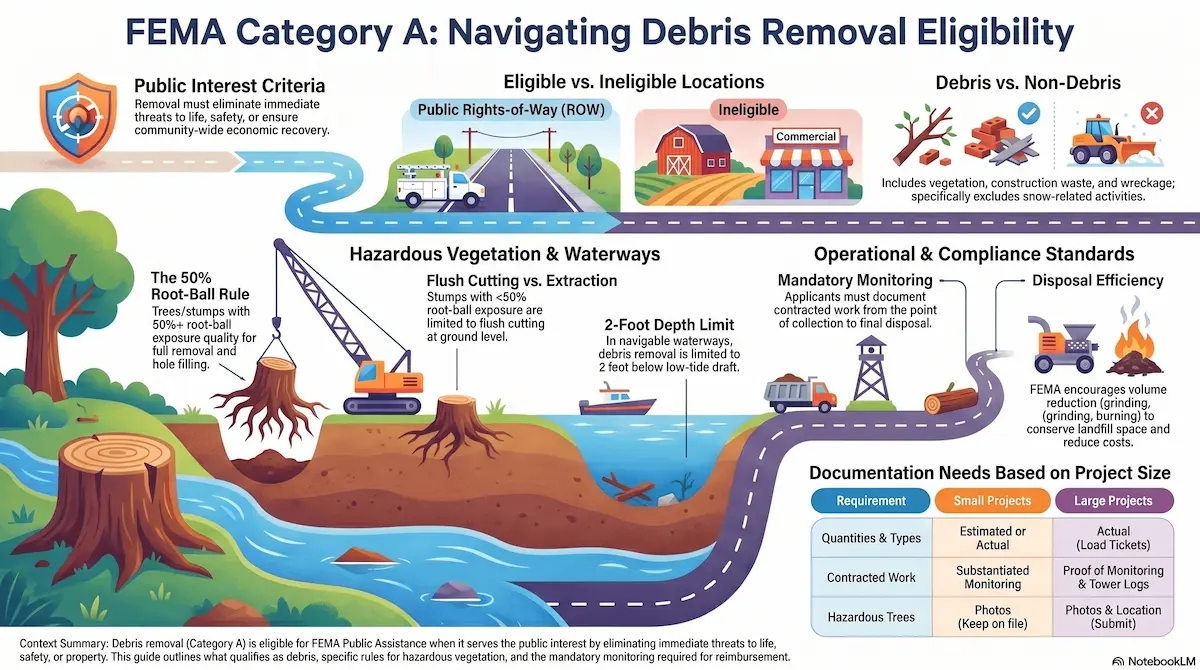 BriefingCategory A Debris Removal Compliance and Reimbursement StandardsDebris removal is one of FEMA PA’s most audit-sensitive recovery costs, where eligibility depends on public interest, legal…
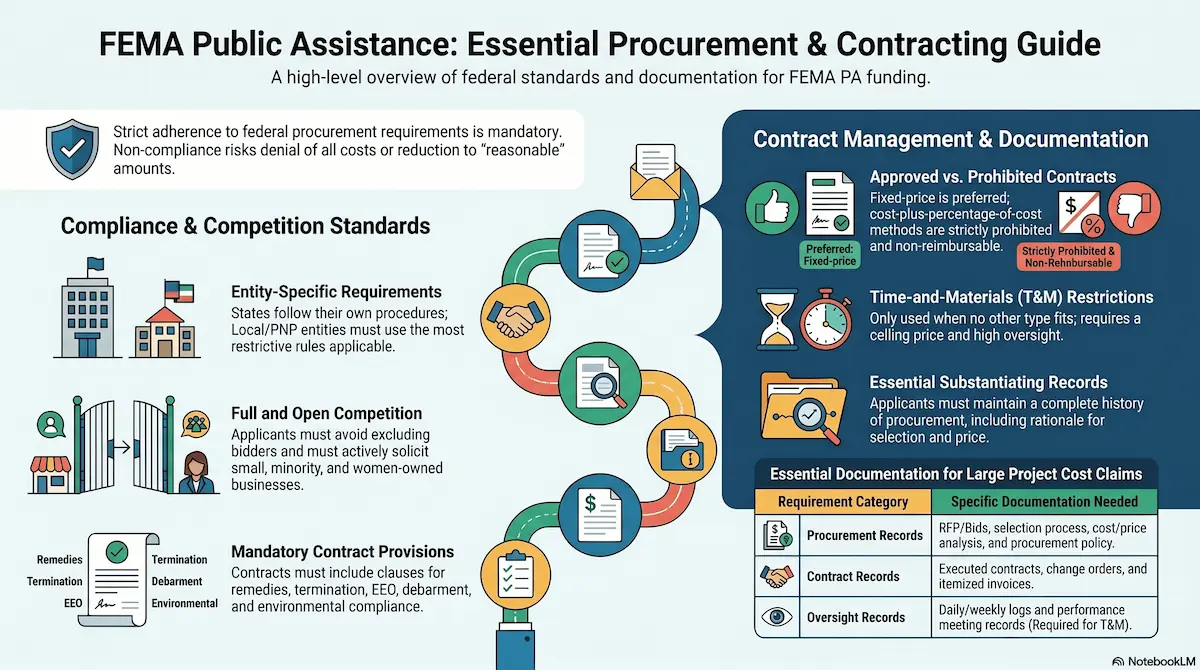 BriefingProcurement Under Exigent or Emergency CircumstancesEmergency procurement can protect lives after a disaster—but it can also put FEMA reimbursement at risk if the record is weak. This…
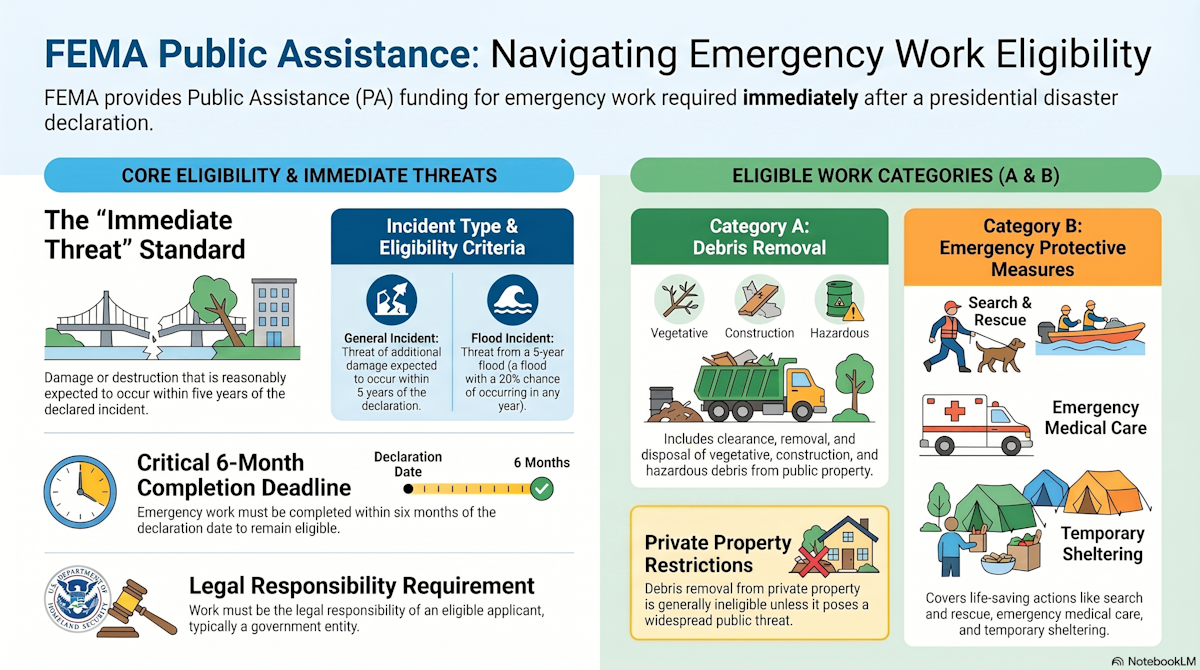 Deep diveEmergency Work ComplianceEmergency Work relies on the 'Immediate Threat' rule, meaning work is eligible only if it addresses threats expected within five years…
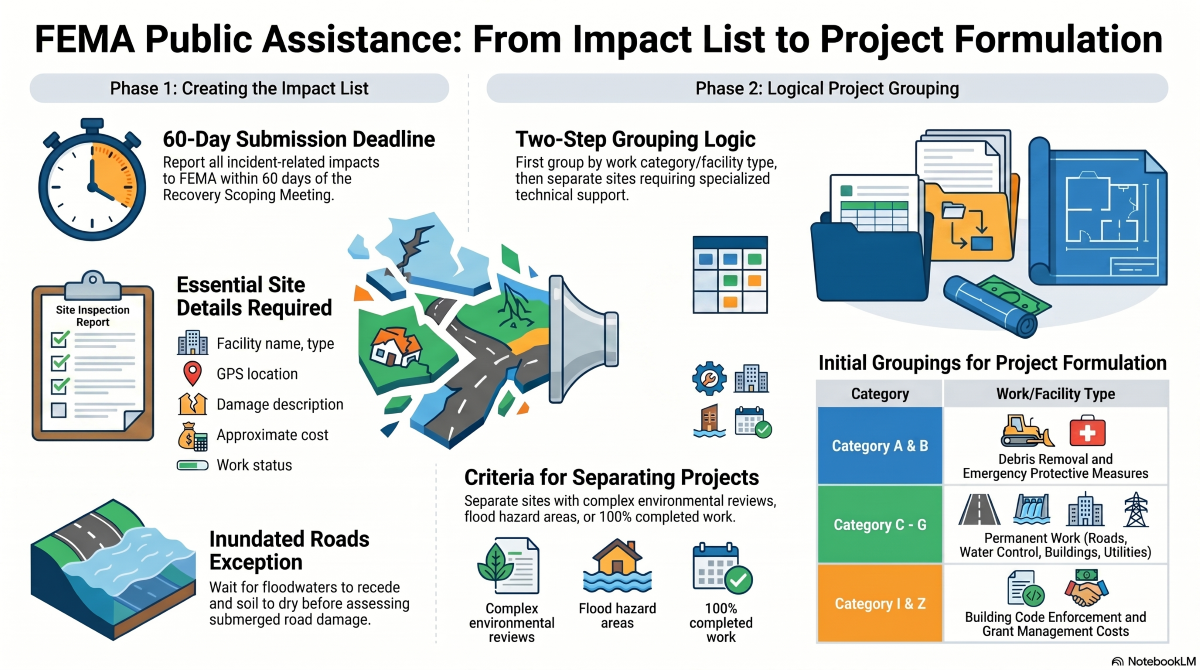 Deep diveDamage and Impact InformationThe 60-day Impact List deadline is crucial—missing it results in permanent ineligibility for damaged facilities.
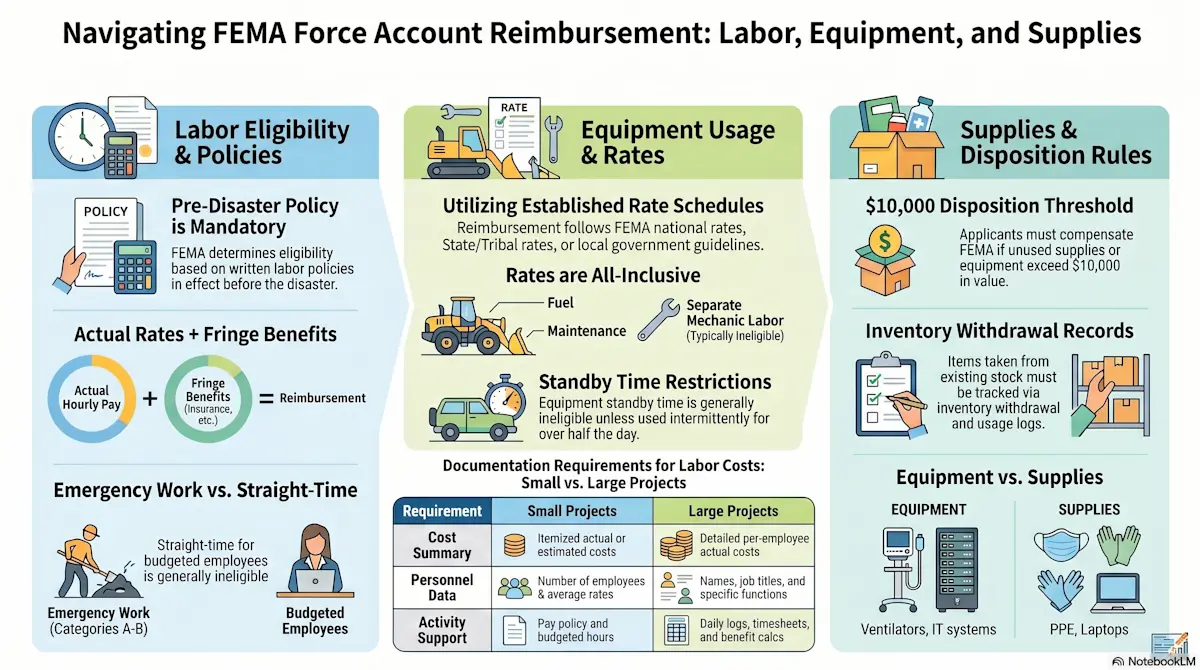
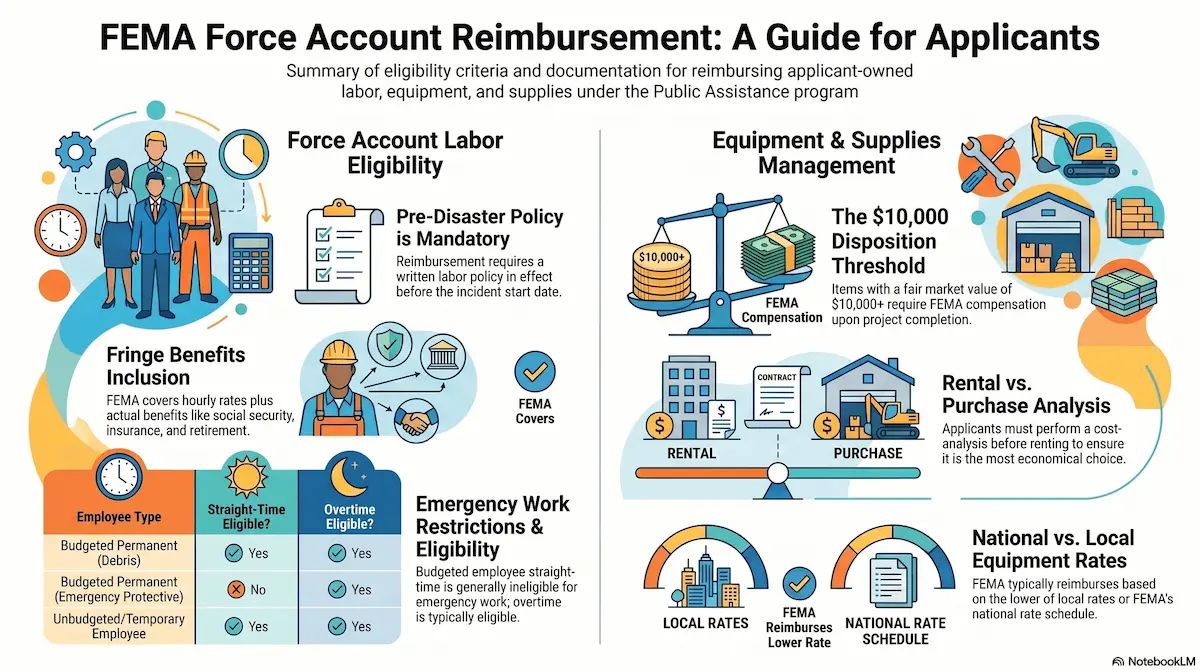 BriefingForce Account Labor and Equipment Reimbursement StandardsForce account claims can be won or lost before the disaster begins. This Govstar resource explains how FEMA PA applicants can protect…
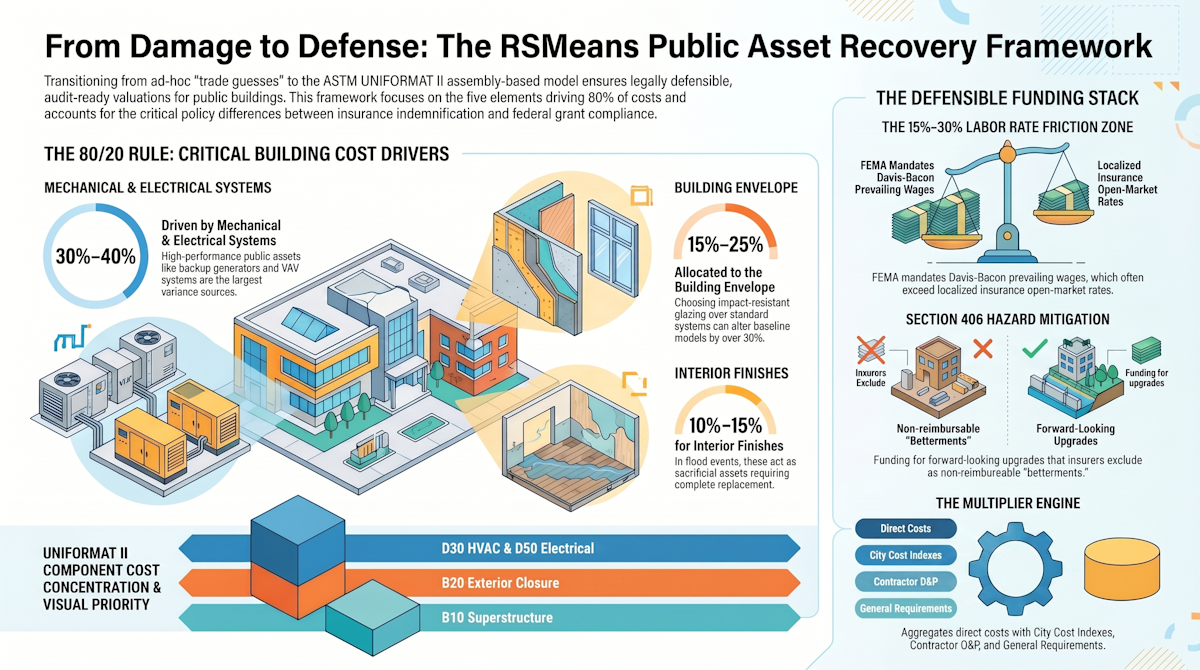 Deep diveRS Means Cost Estimating ToolsRS Means provides industry-standard cost data that FEMA uses to ensure cost reasonableness and establish market benchmarks.
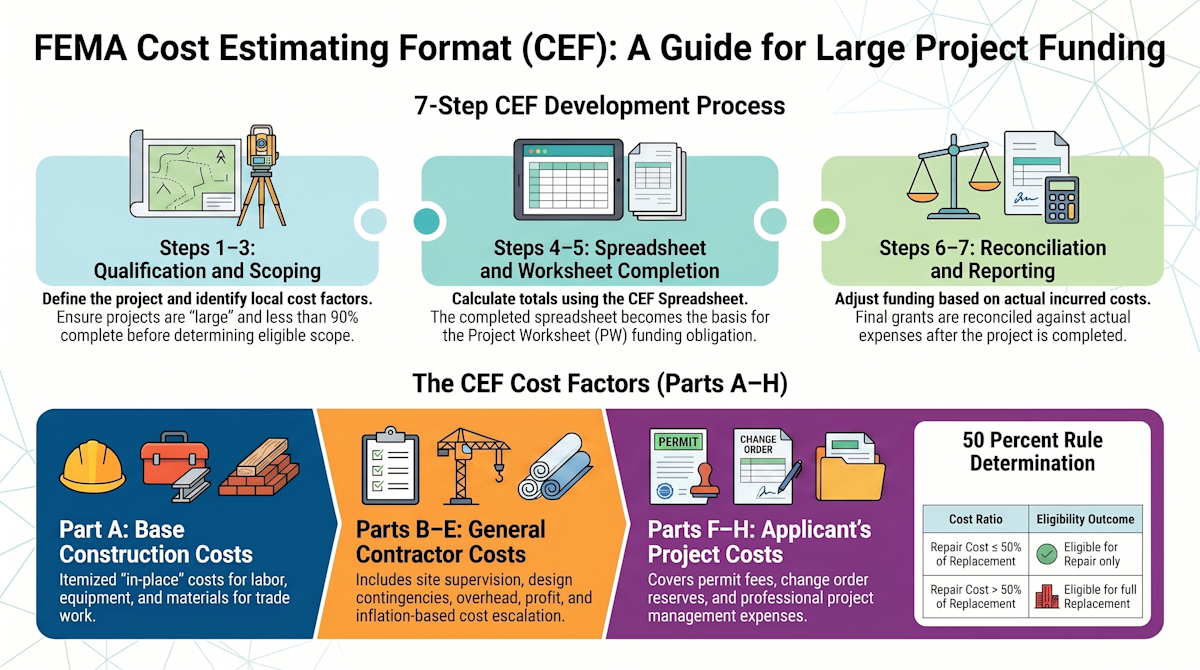 Deep diveCost Estimating Format (CEF) FEMA PA ComplianceThe CEF is FEMA's standardized tool for estimating large projects when work is less than 90% complete.
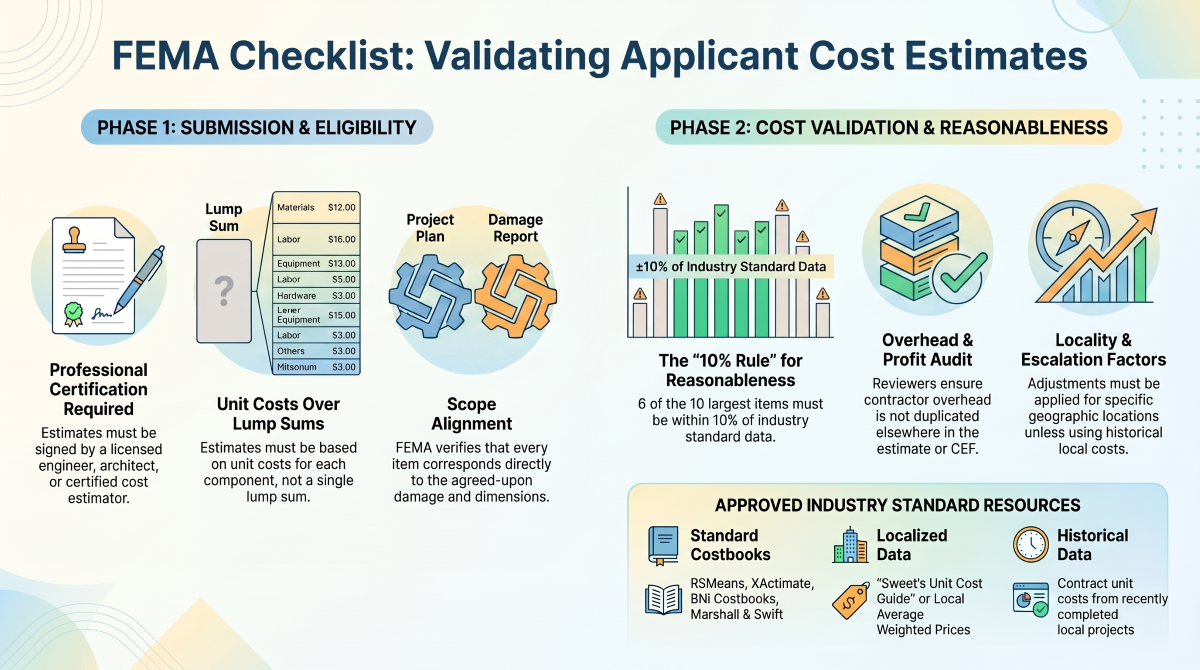 Deep diveCost Estimate Validation and Audit ReadinessAppendix L establishes eight essential validation criteria FEMA uses to assess cost estimates.
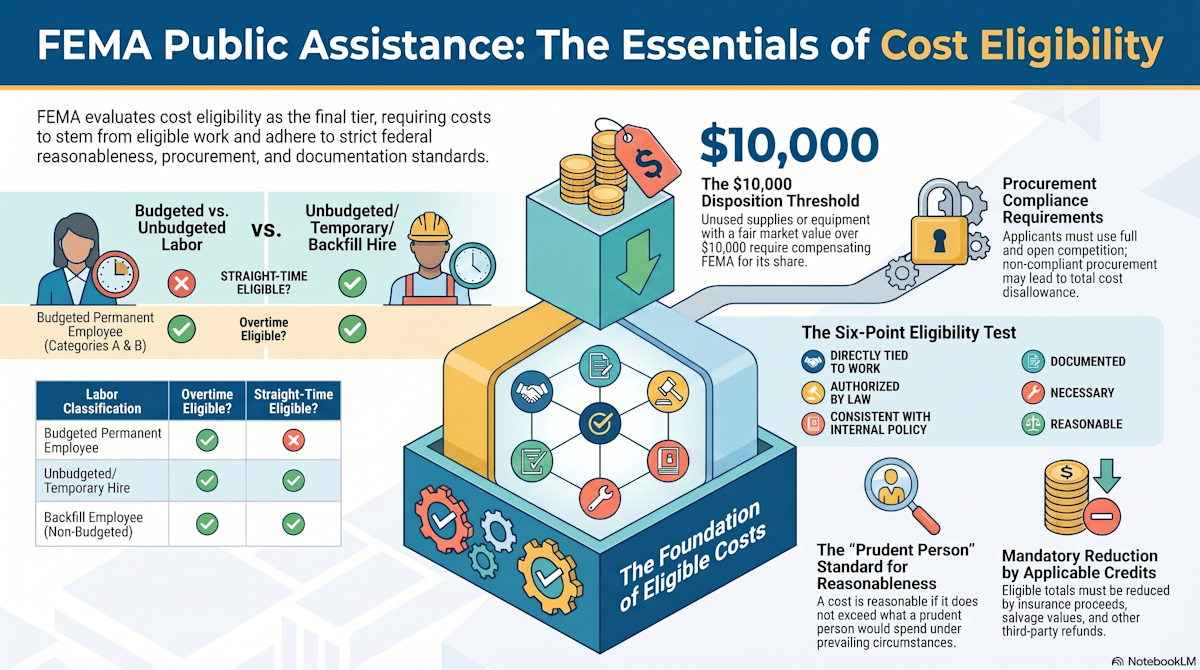 Deep diveCost Eligibility ComplianceCost eligibility is the final checkpoint in the FEMA PA pyramid where otherwise valid projects can fail.
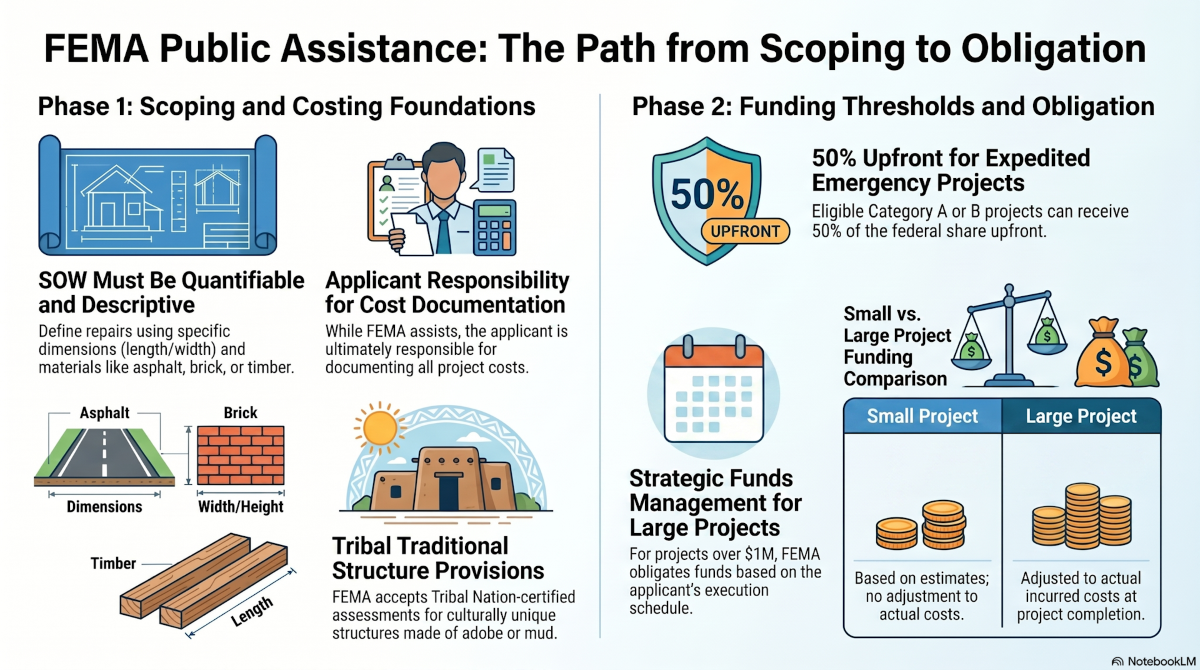 Deep diveScoping, Costing, and Final Reviews for Federal Disaster AssistanceEvery funded activity must be directly linked to eligible disaster damage—this 'Absolute Grounding' requirement is essential for FEMA…
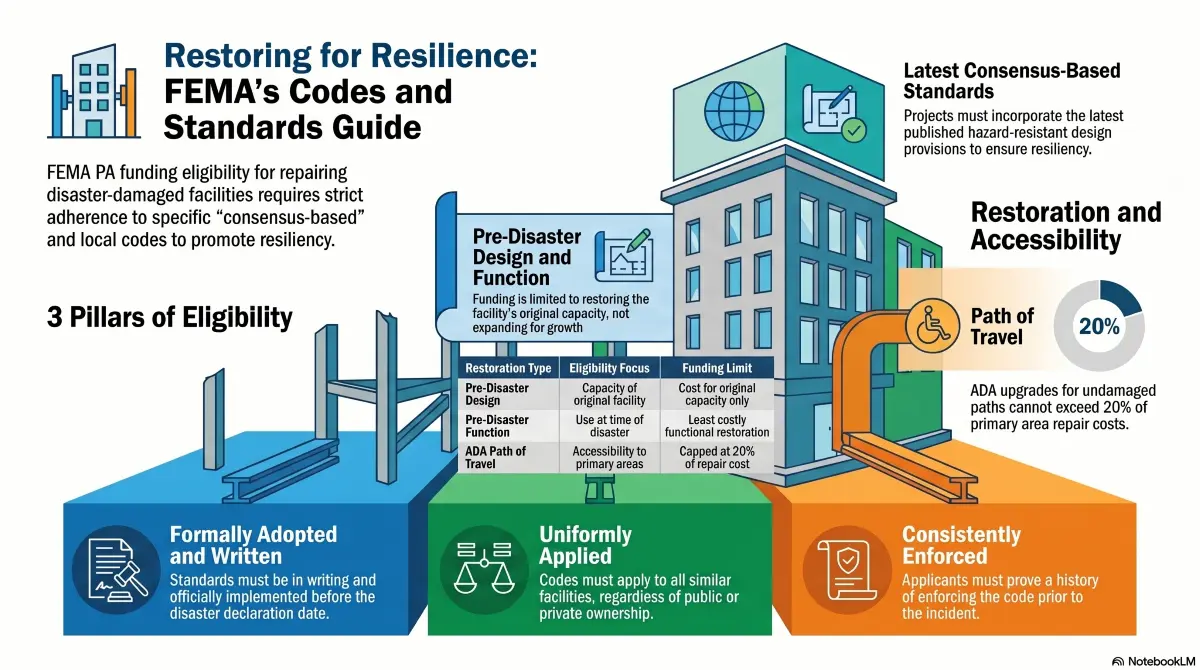 BriefingCodes and Standards ComplianceCodes and standards serve as the essential foundation for disaster resilience and are the primary determinants of federal funding…
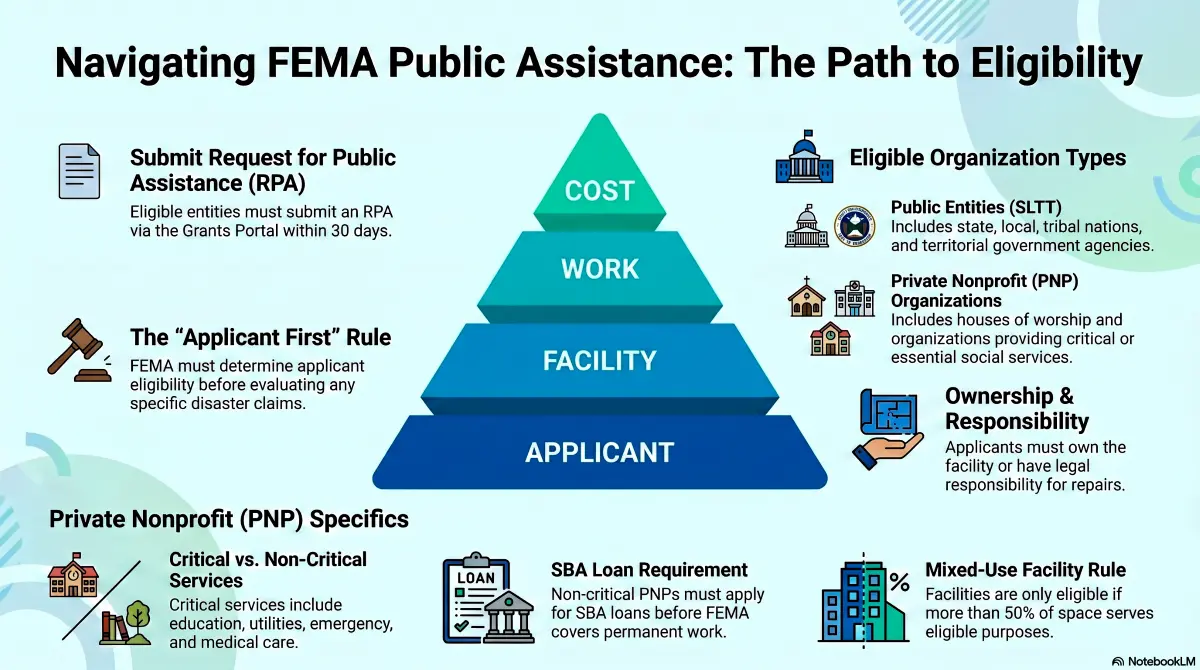 BriefingFacility and Work Eligibility Regulatory AnalysisSecuring federal disaster funding through the FEMA Public Assistance (PA) Program necessitates a mastery of the eligibility "pyramid"—a…
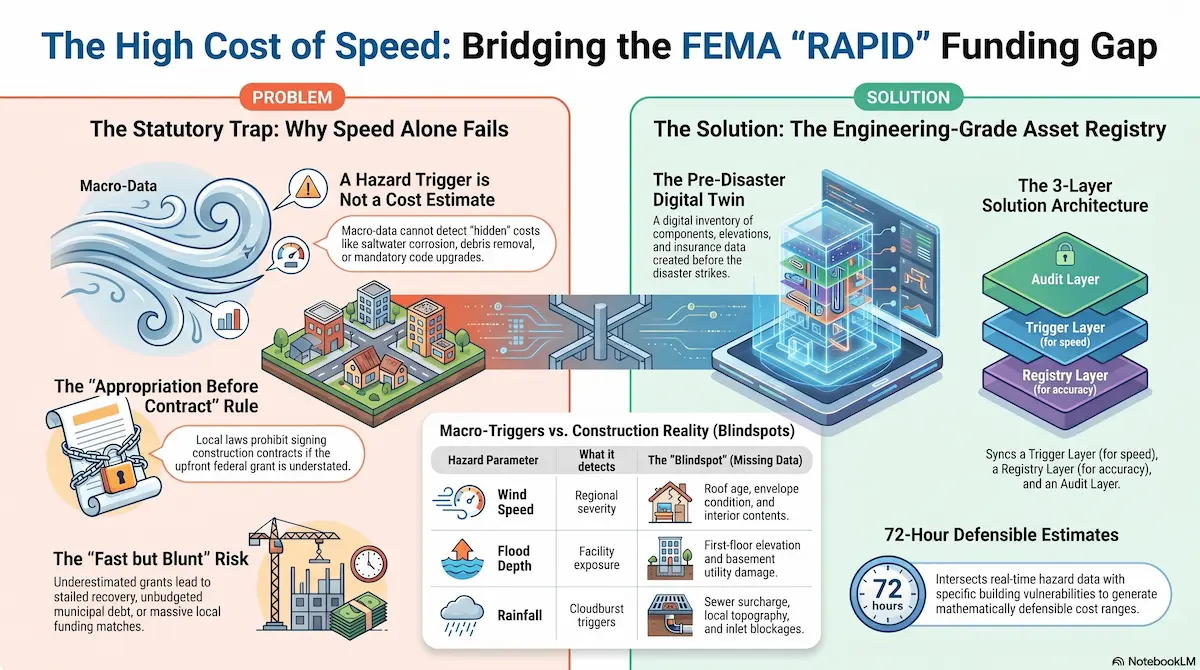 BriefingA Blueprint for Resilient Disaster FinanceBasis risk is the dangerous gap between a fast parametric payout and the real cost of rebuilding damaged infrastructure. This Govstar…
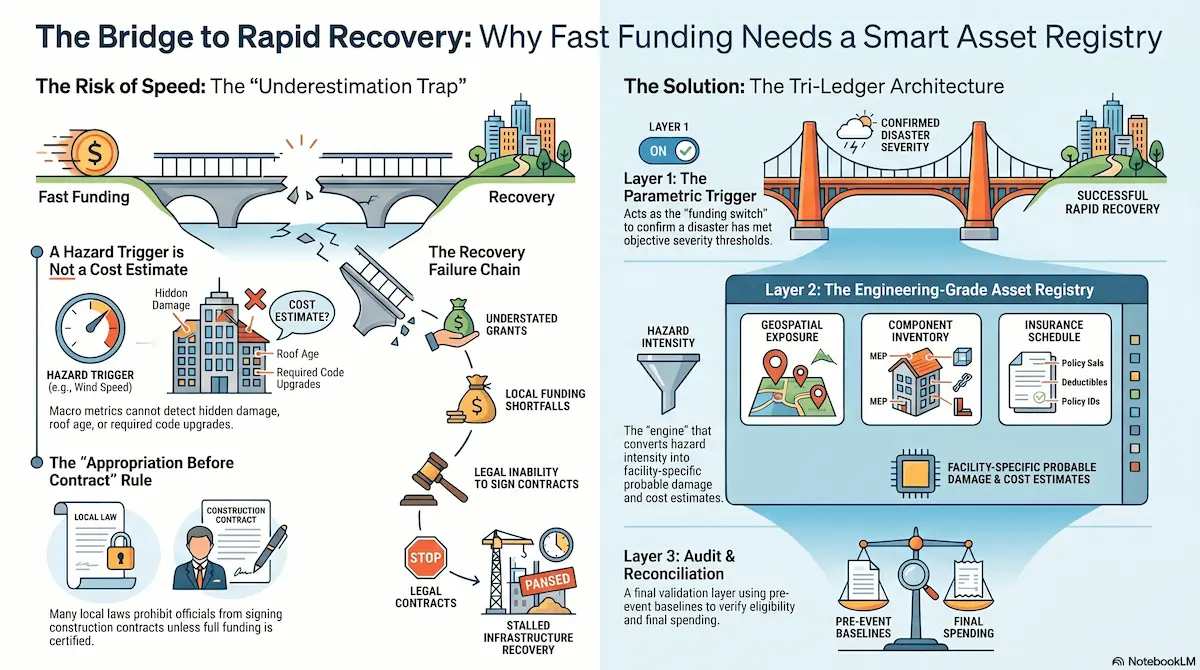 BriefingNavigating the Parametric Blindspot: A Strategic Framework for Municipal Disaster ResilienceUpfront disaster funding only works if speed is backed by asset-level intelligence. This Govstar resource explains how a Smart Asset…
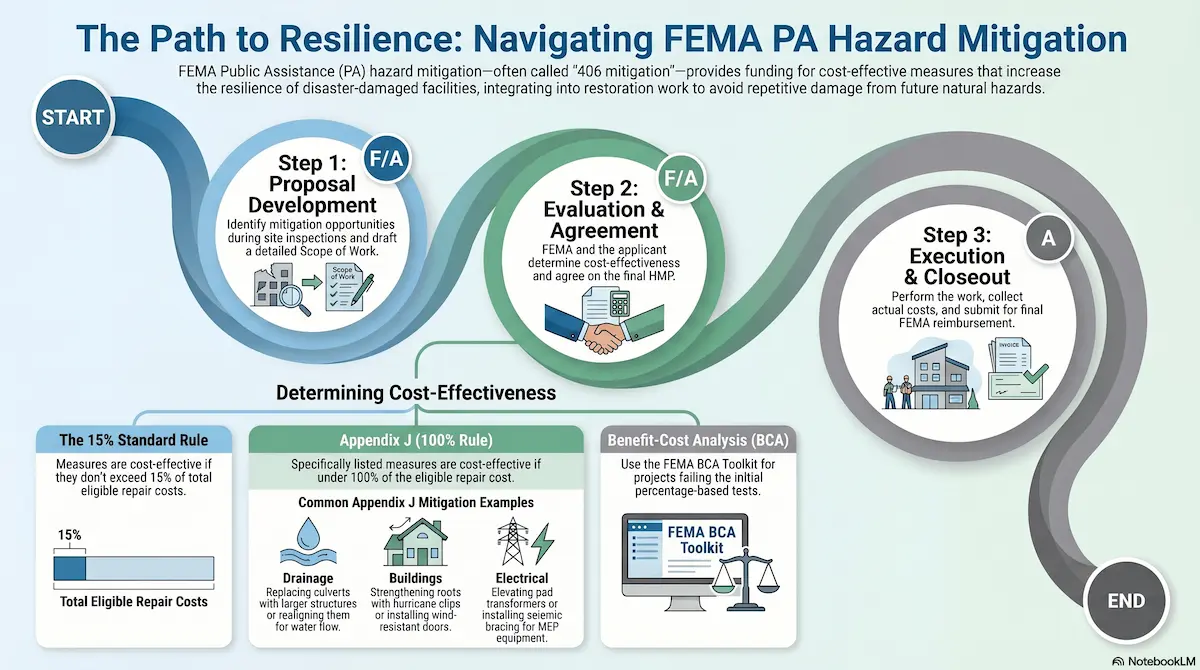 BriefingStrategic Framework for Infrastructure Resilience: Leveraging FEMA Section 406 FundingSection 406 Hazard Mitigation helps FEMA PA applicants turn disaster repairs into long-term resilience projects. This Govstar resource…
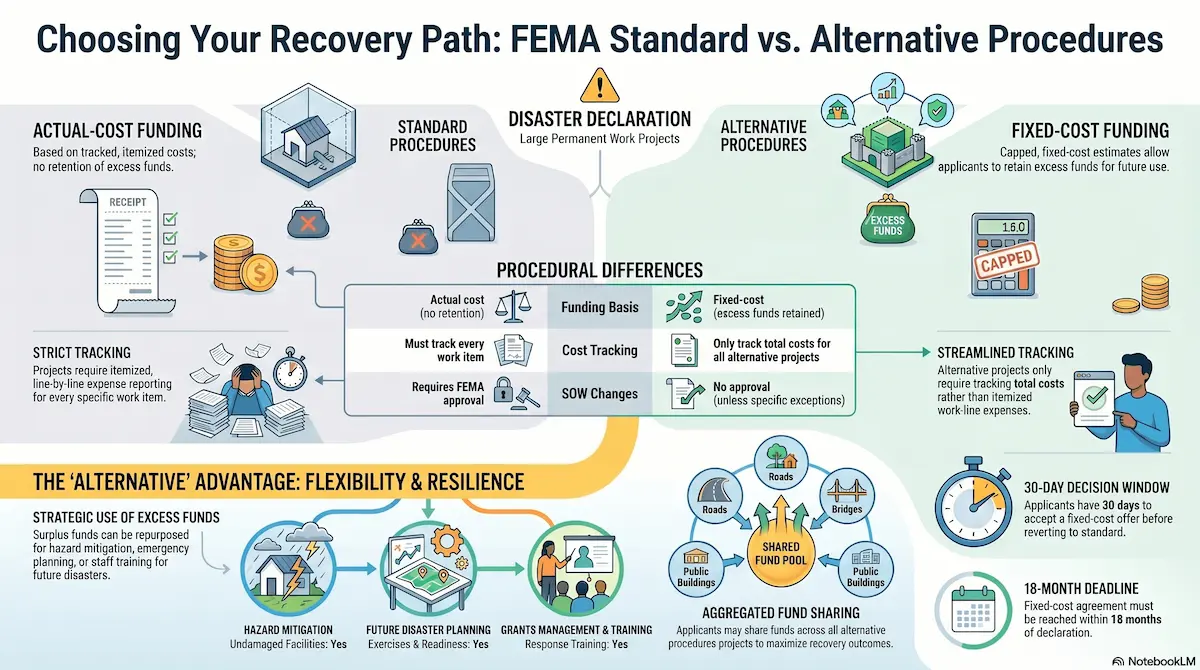 BriefingSection 428 Alternative Procedures for Infrastructure RestorationSection 428 can give FEMA PA applicants major flexibility—but only if they understand the fixed-cost risk before accepting. This Govstar…
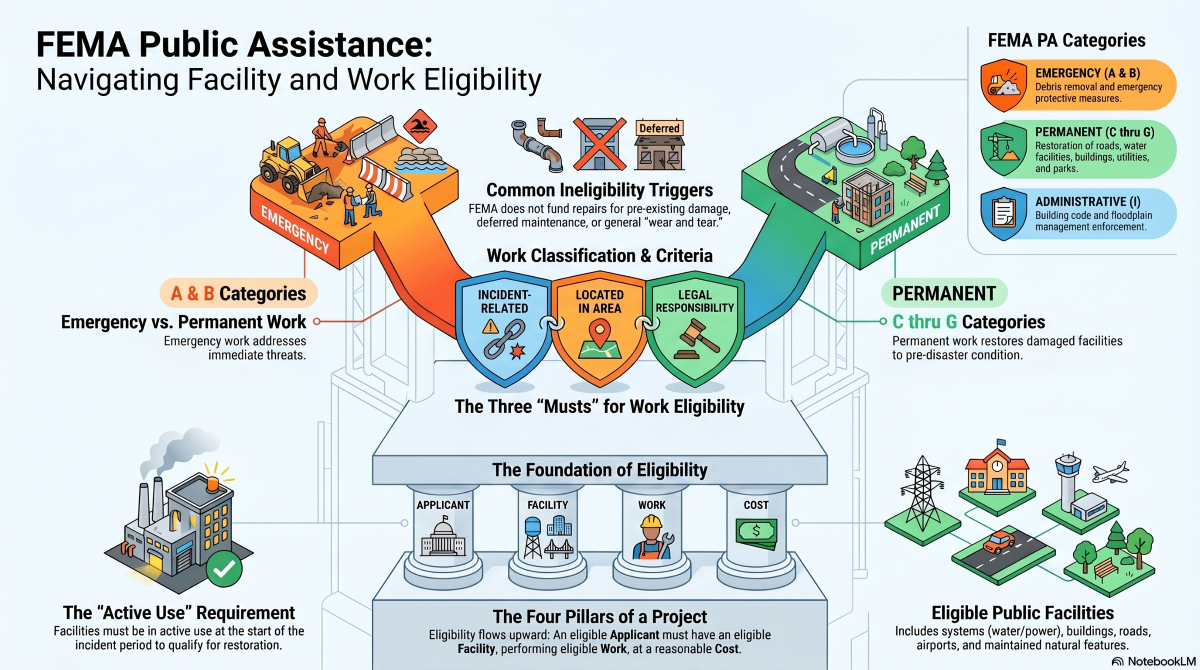 Deep diveWork Eligibility ConsiderationsWork eligibility depends on three mandates: incident causation, geographic scope within designated areas, and legal responsibility.
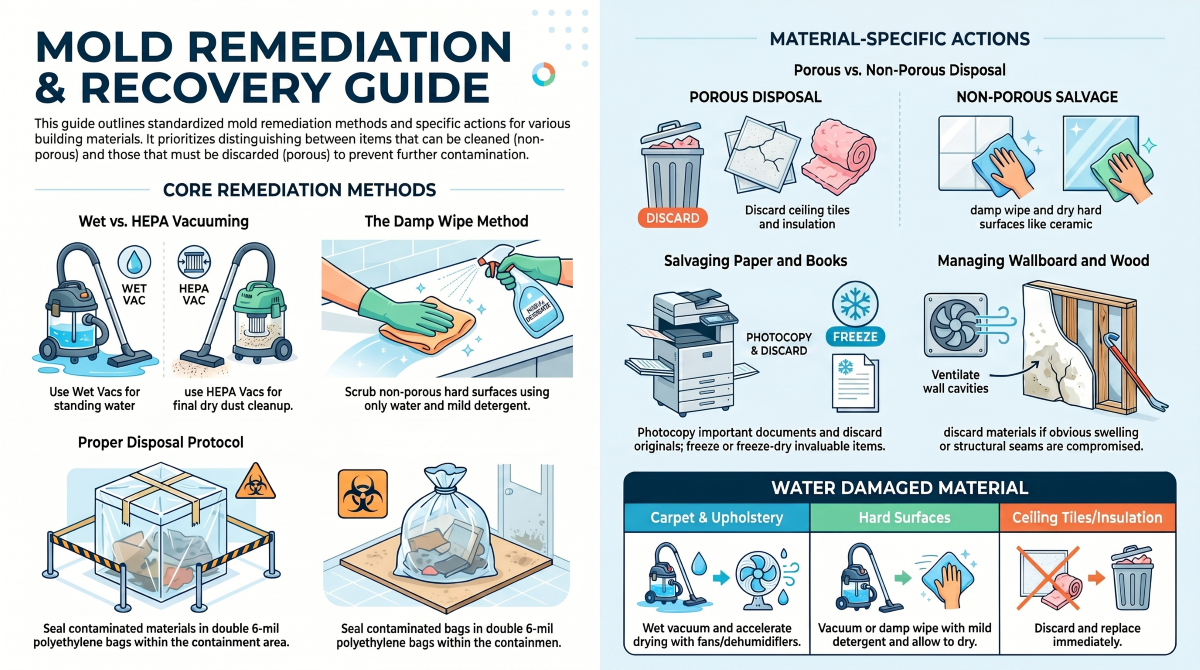 Deep diveMold Remediation and Recovery OperationsMold remediation eligibility focuses on addressing immediate health risks from incident-related moisture intrusion while excluding…
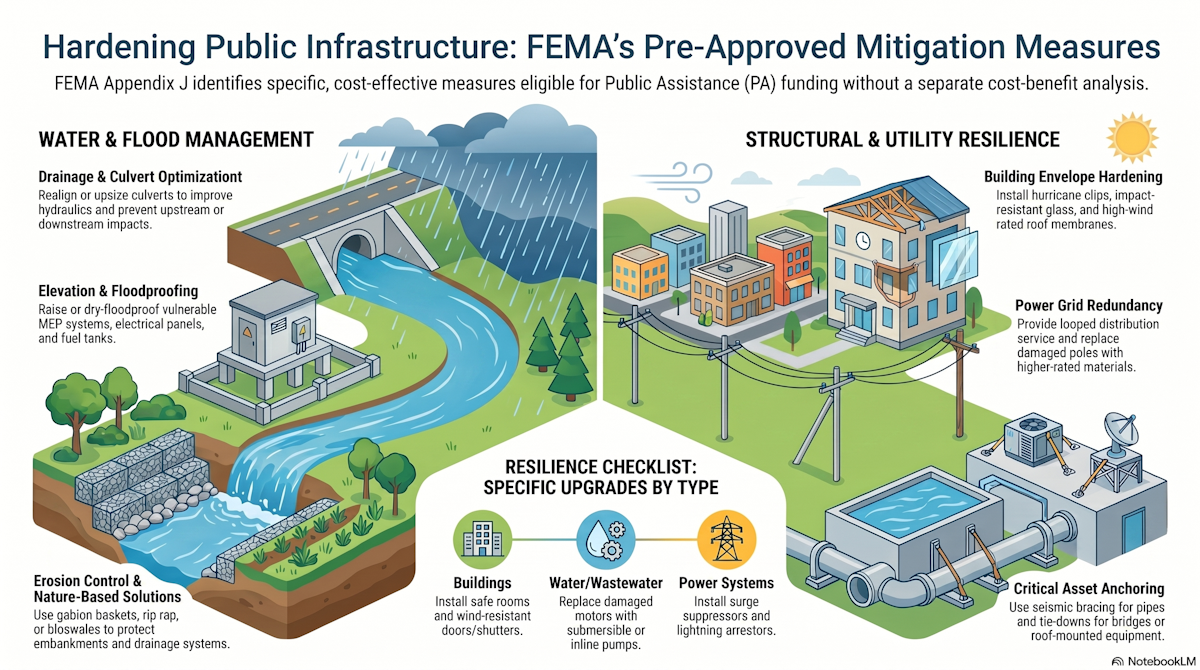 Deep diveHazard Mitigation Measures (Appendix J)Section 406 Hazard Mitigation turns recovery into lasting resilience. Appendix J provides a list of pre-approved measures that qualify…
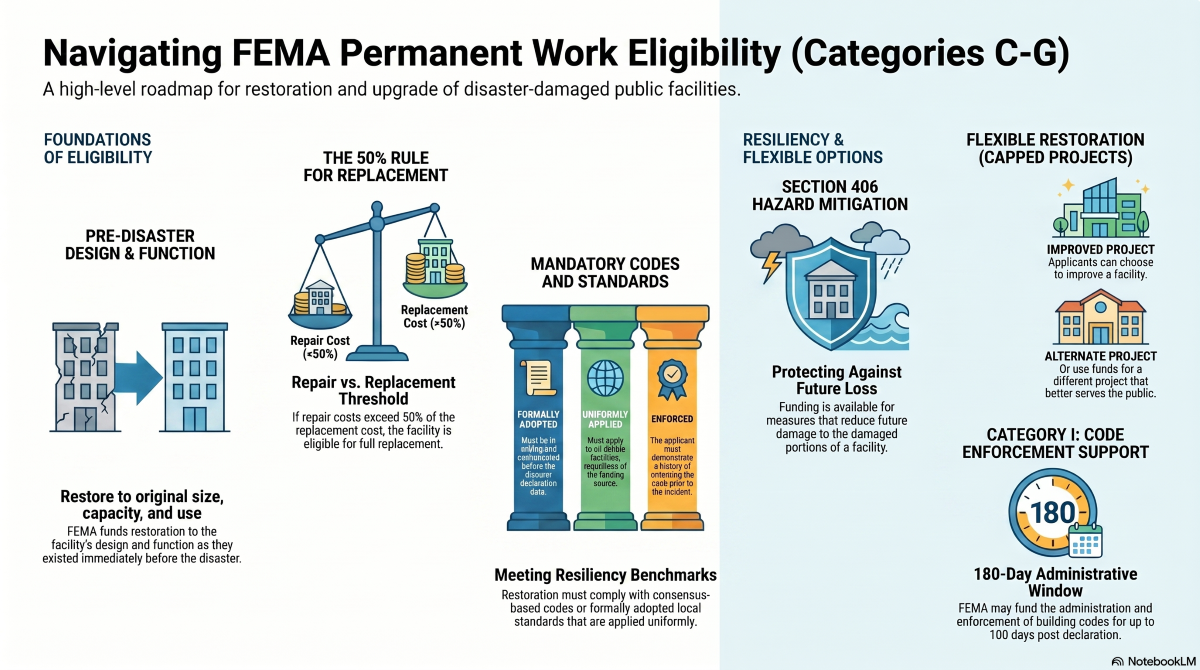 Deep divePermanent Work Eligibility (Categories C-G)Permanent work moves from restoring to yesterday to building for tomorrow, including codes and standards and the 50 percent…
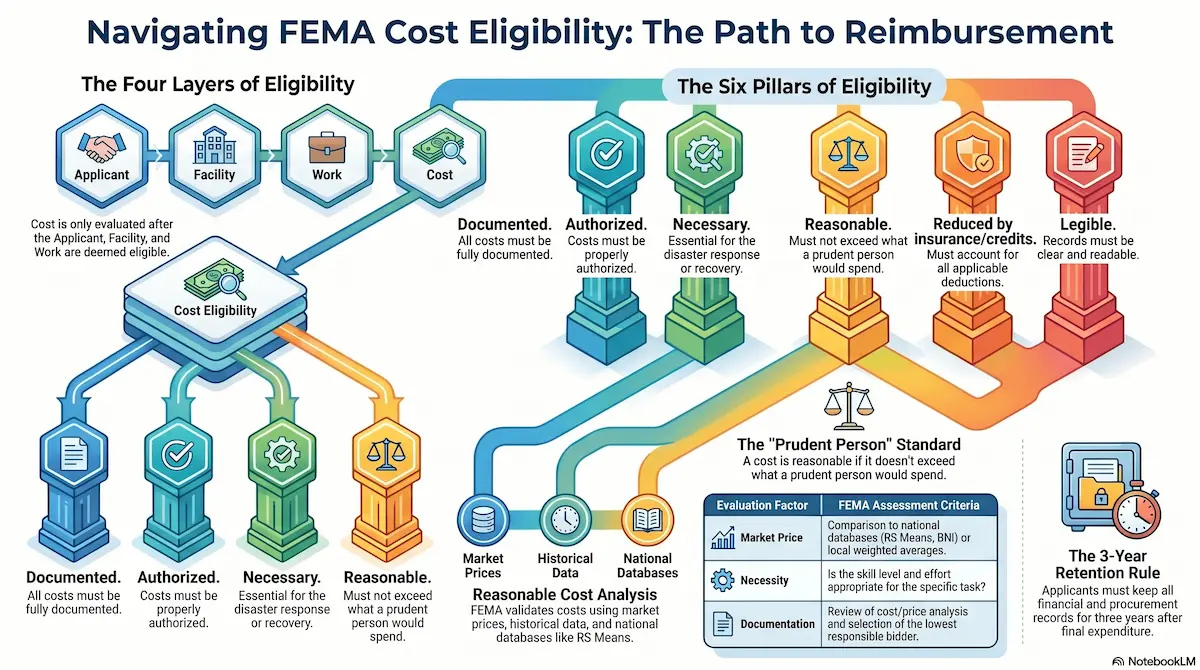 BriefingOperational Standards for Disaster Recovery Expense Compliance: FEMA Public Assistance ProgramCost eligibility is the final gate in FEMA PA reimbursement—and the place where otherwise valid projects can still lose funding. This…
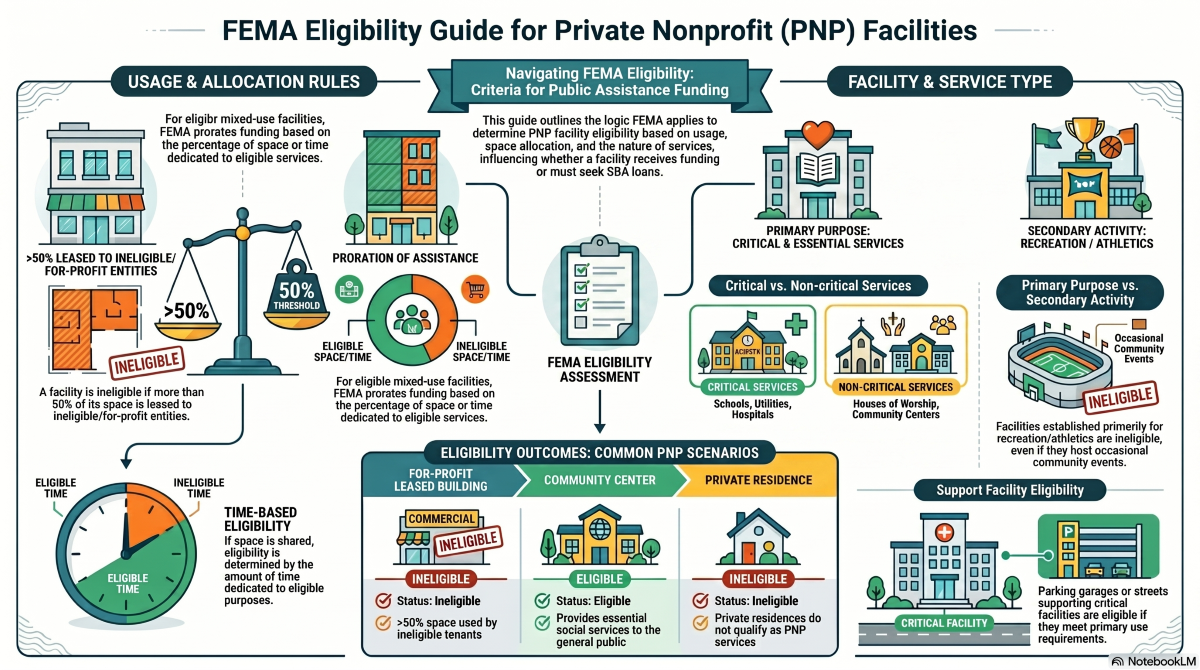 Deep divePrivate Nonprofit (PNP) Facility Eligibility StandardsPNP eligibility presents significant audit challenges requiring three essential criteria: organization status, facility ownership, and…
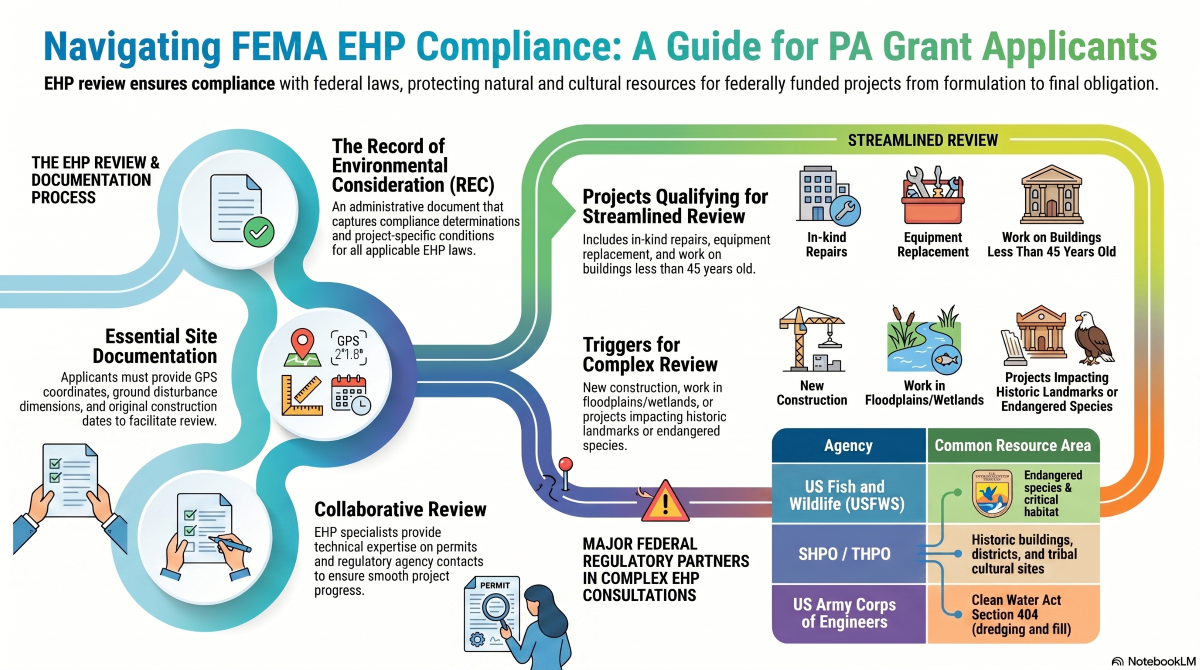 Deep diveEnvironmental and Historic PreservationEHP compliance is a critical risk factor where initiating site work before completing review often results in total project de-obligation.
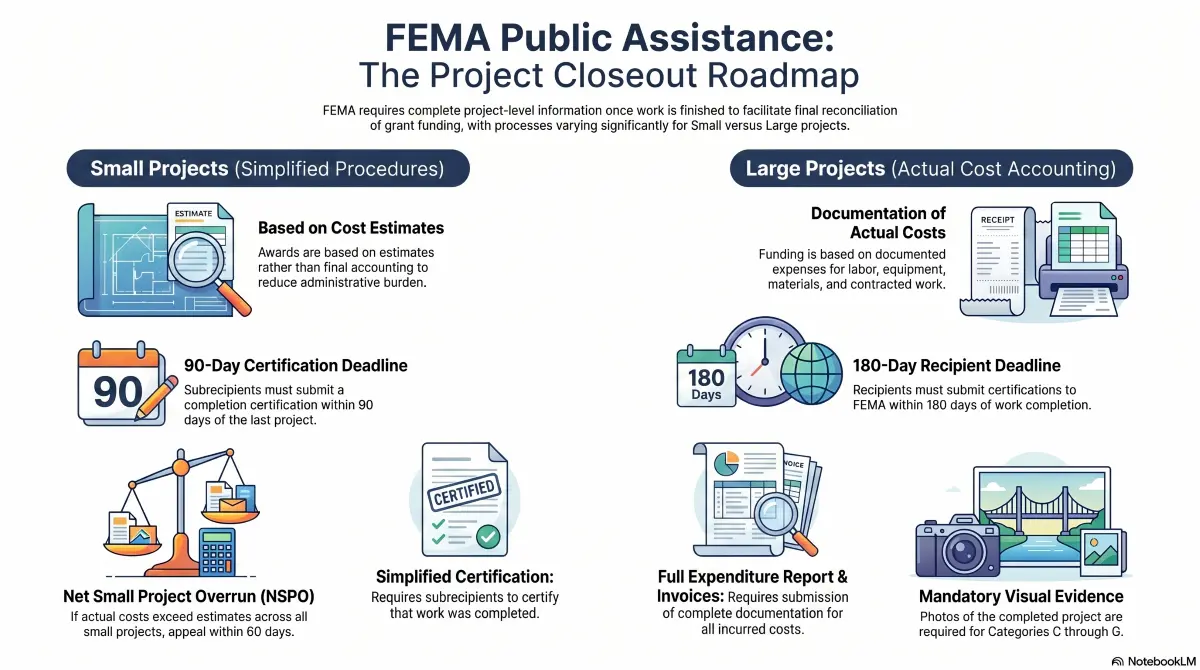 Deep diveReconciliation and CloseoutProject closeout is the ultimate accountability checkpoint where large projects reconcile to actual costs and small projects receive…
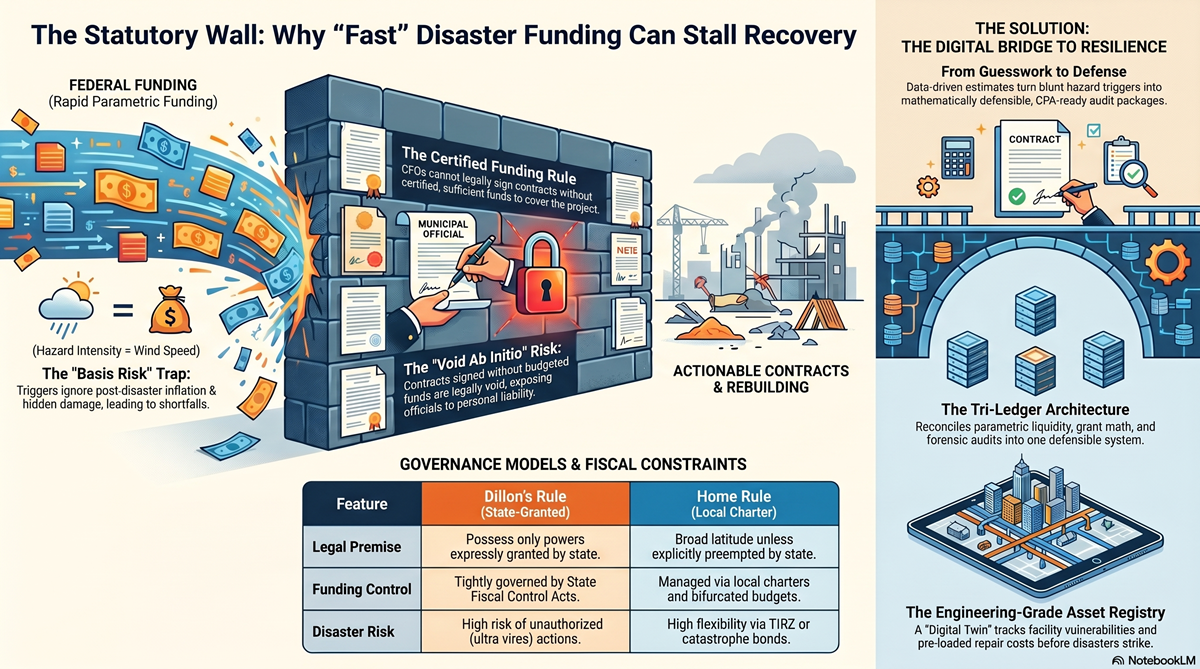 BriefingWhy "Fast Cash" for Disasters Is a Legal Trap: 5 Things Local Leaders Must KnowSpeed is not enough when disaster funding must survive local budget law, audit review, and real construction costs. This Govstar…
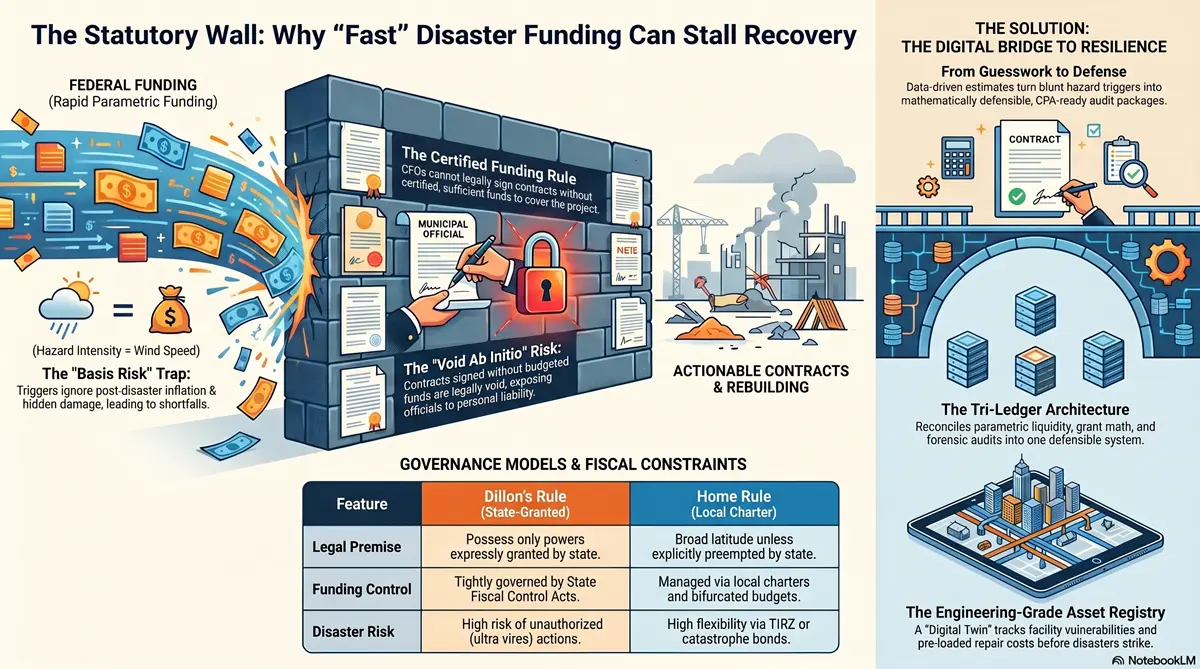 BriefingStatutory Wall: Navigating Local Governance and Disaster RebuildingSpeed can unlock disaster funding, but it cannot override local budget law. This Govstar guide explains why RAPID upfront grants and…
Looking for a specific rule? Browse the 22 subject centers, use the PAPPG Explorer, or search GovStar.